
※Because natural wood is used, the grain pattern and color may vary from piece to piece.
※Actual color may differ slightly depending on your monitor settings.
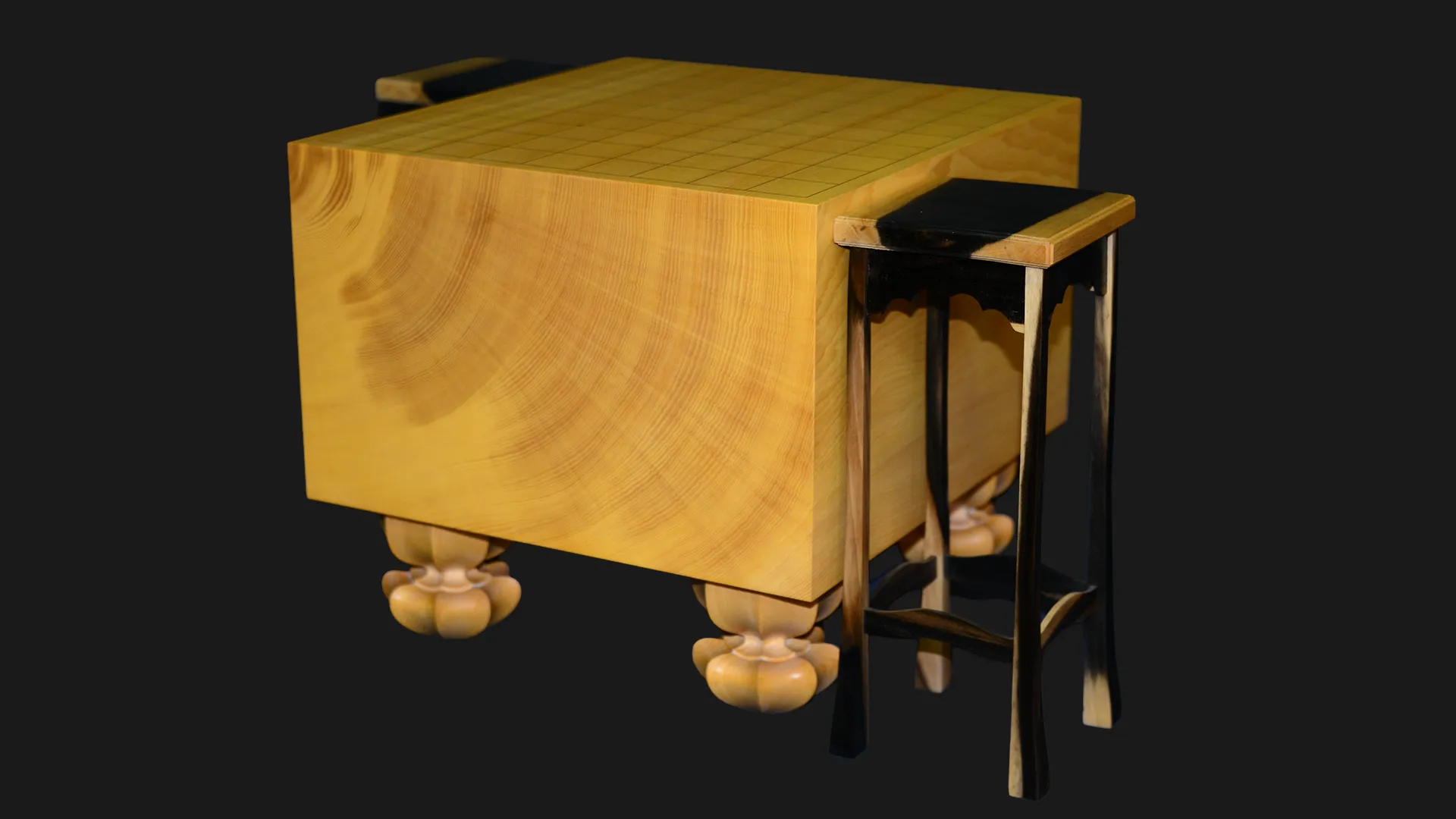
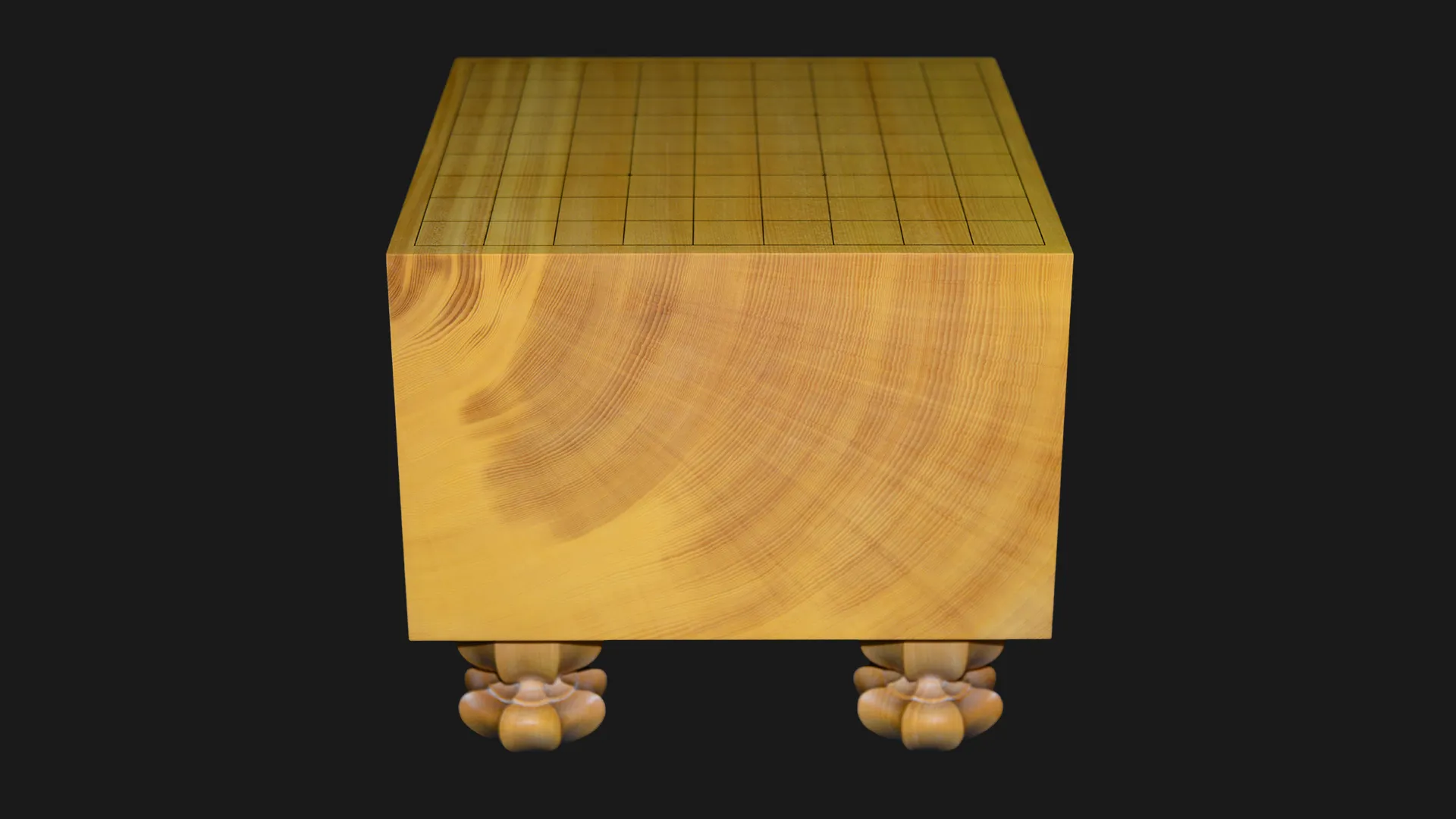
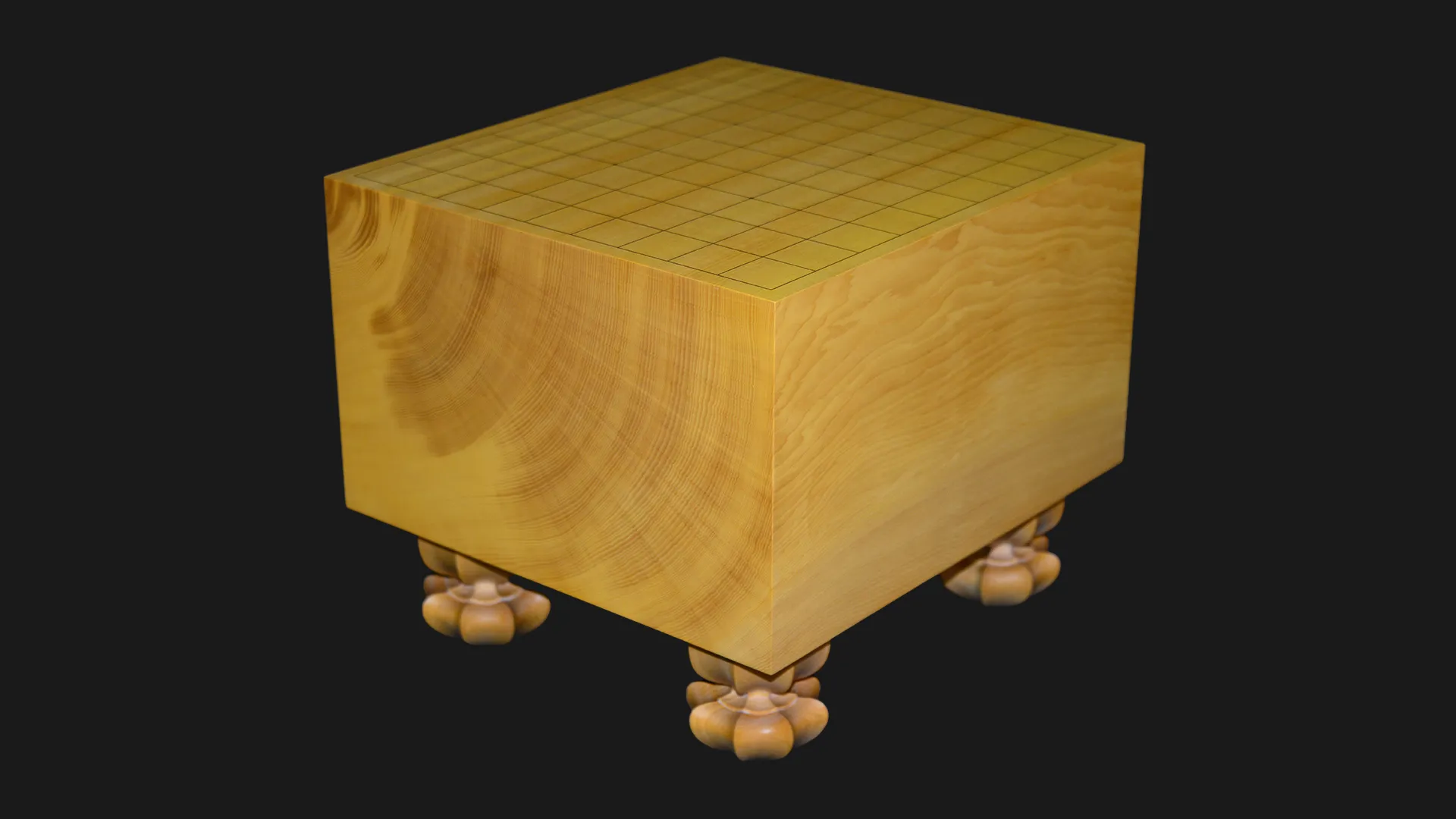
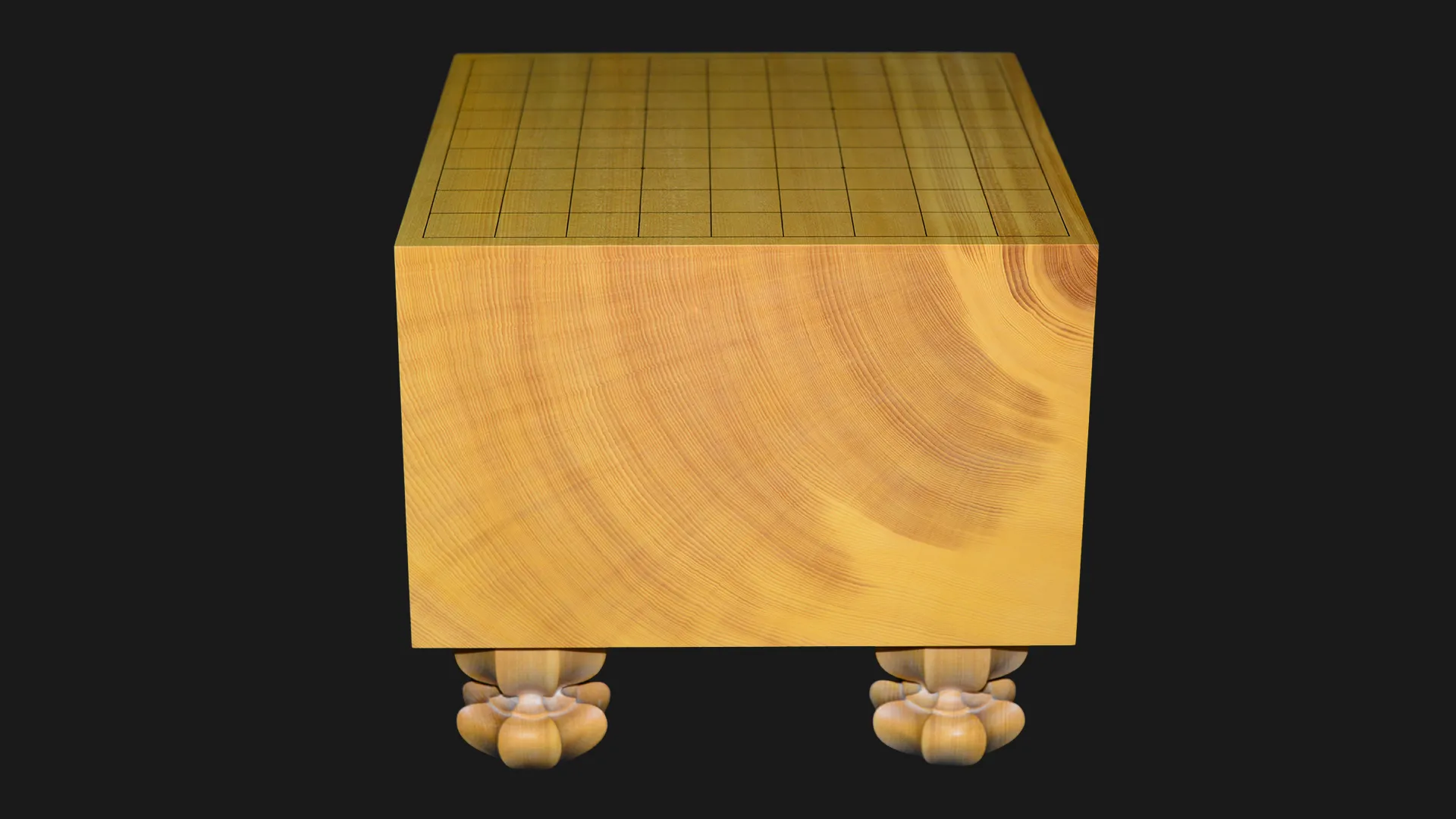
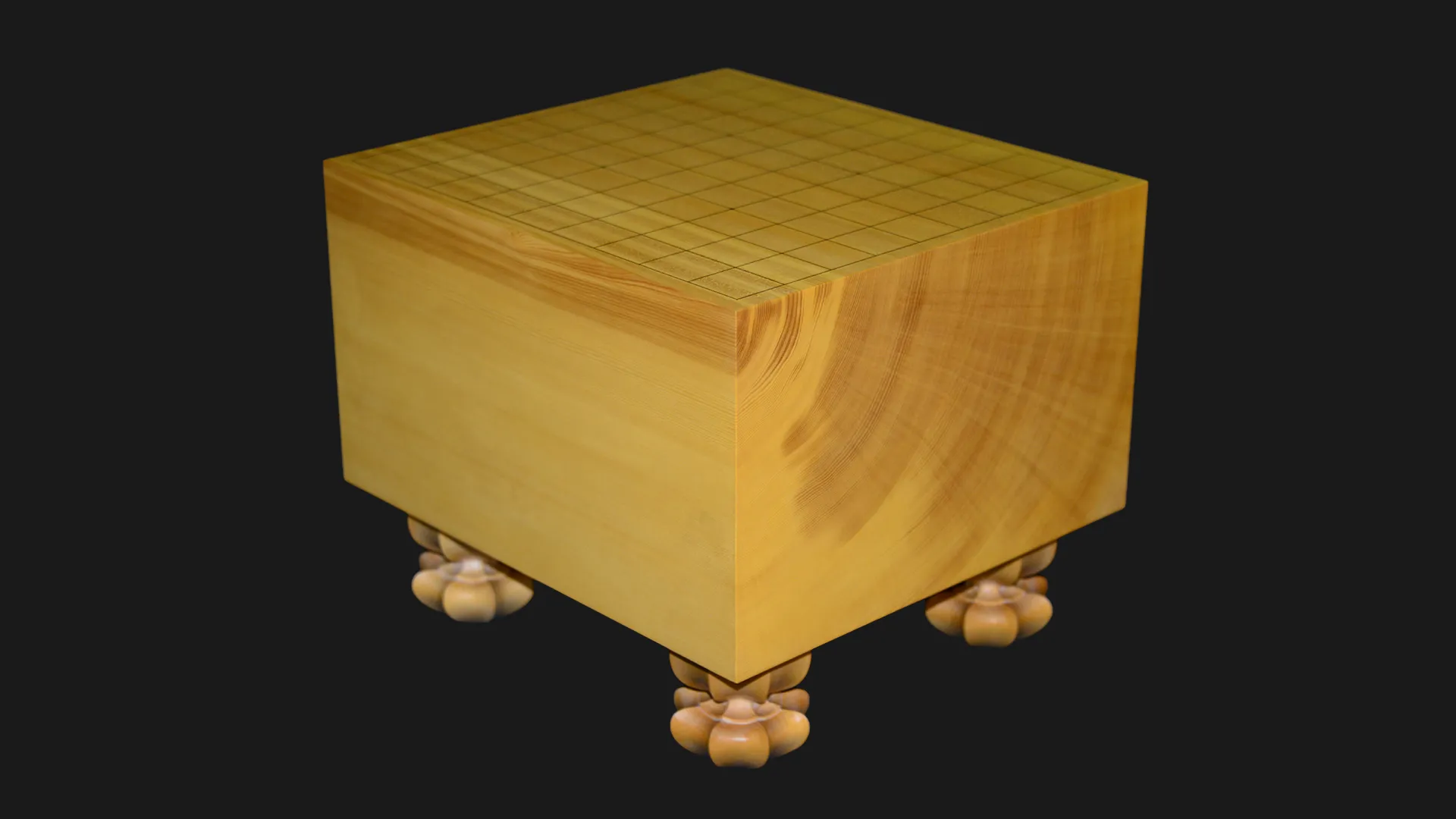
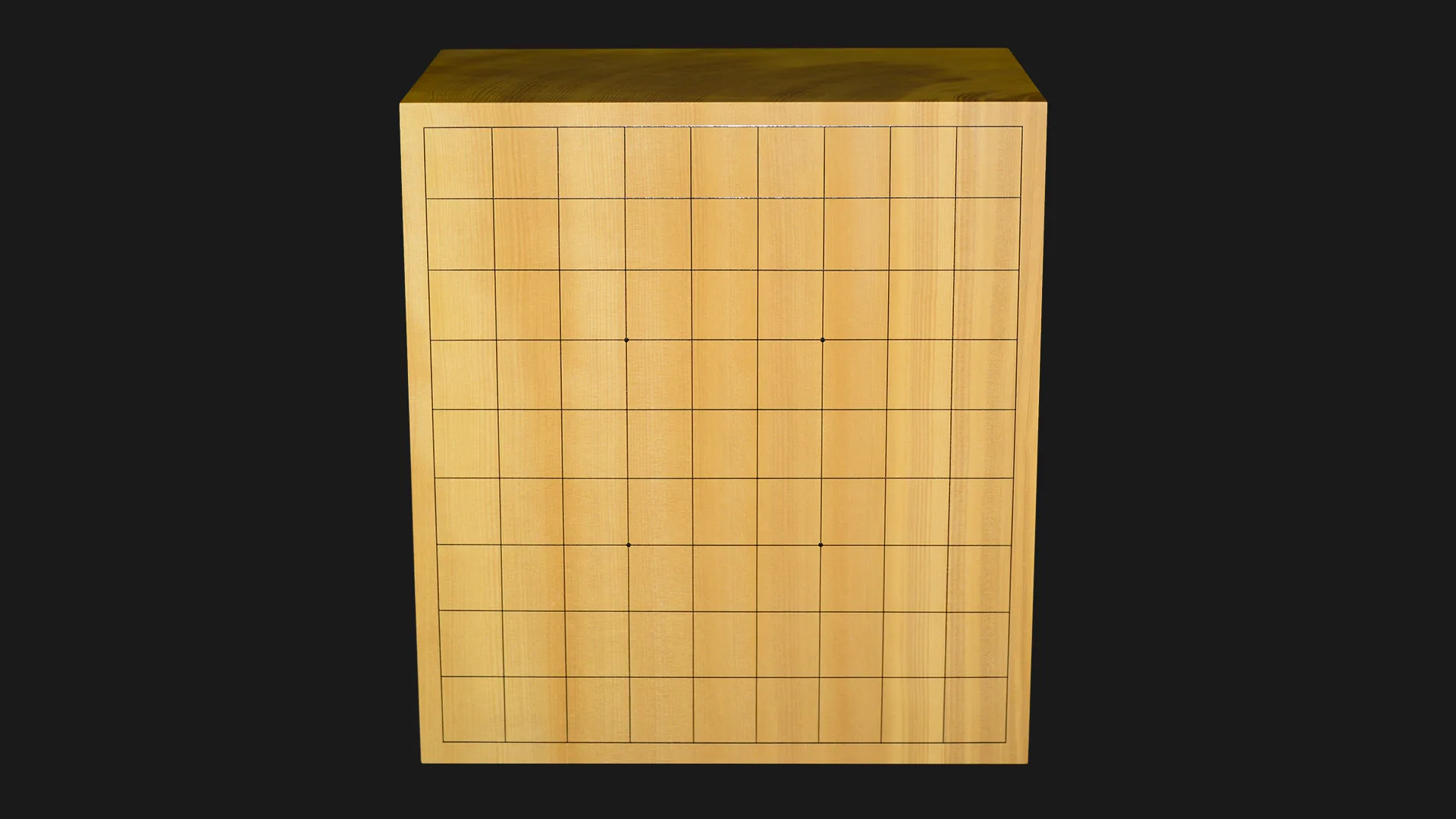
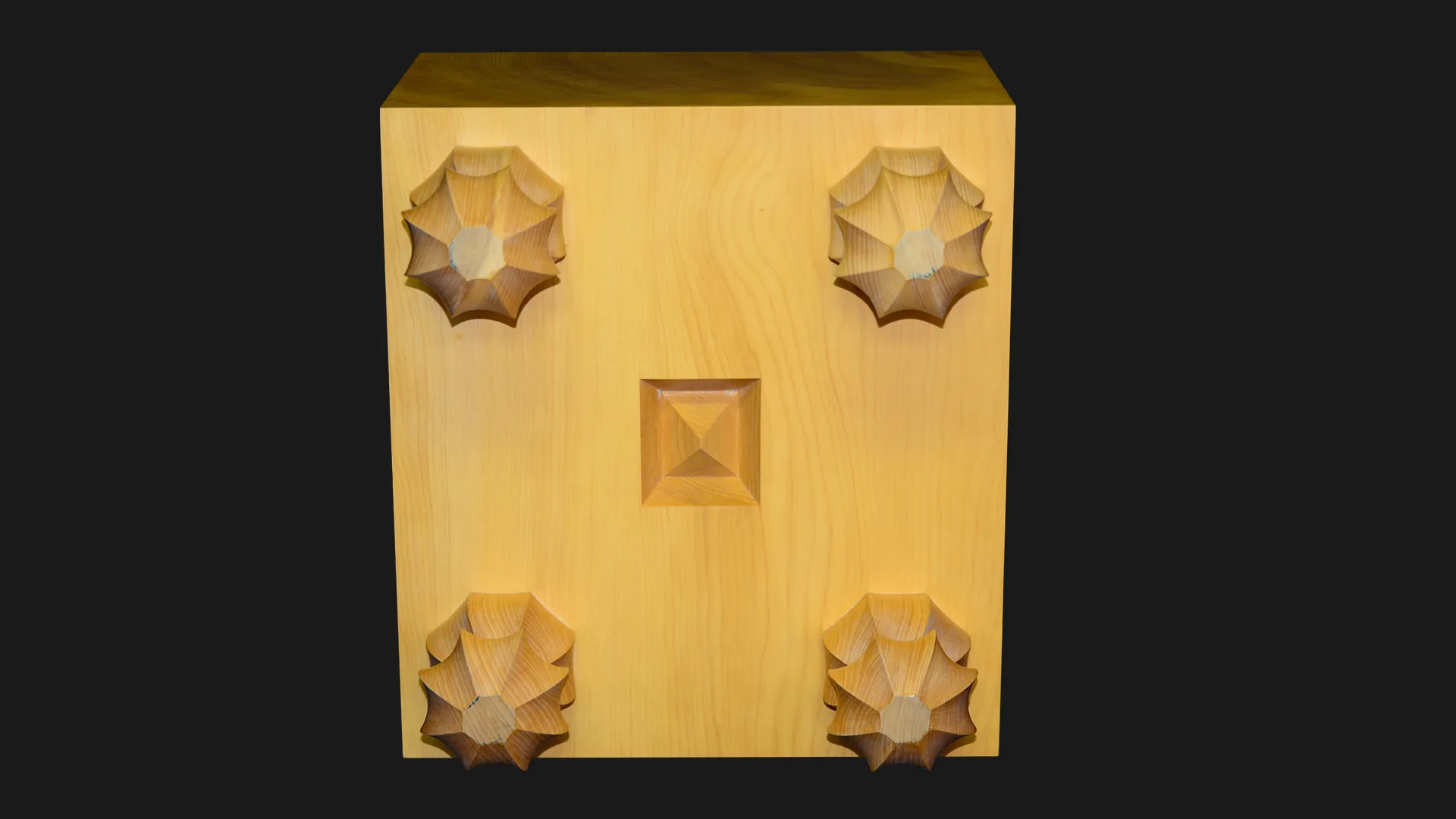
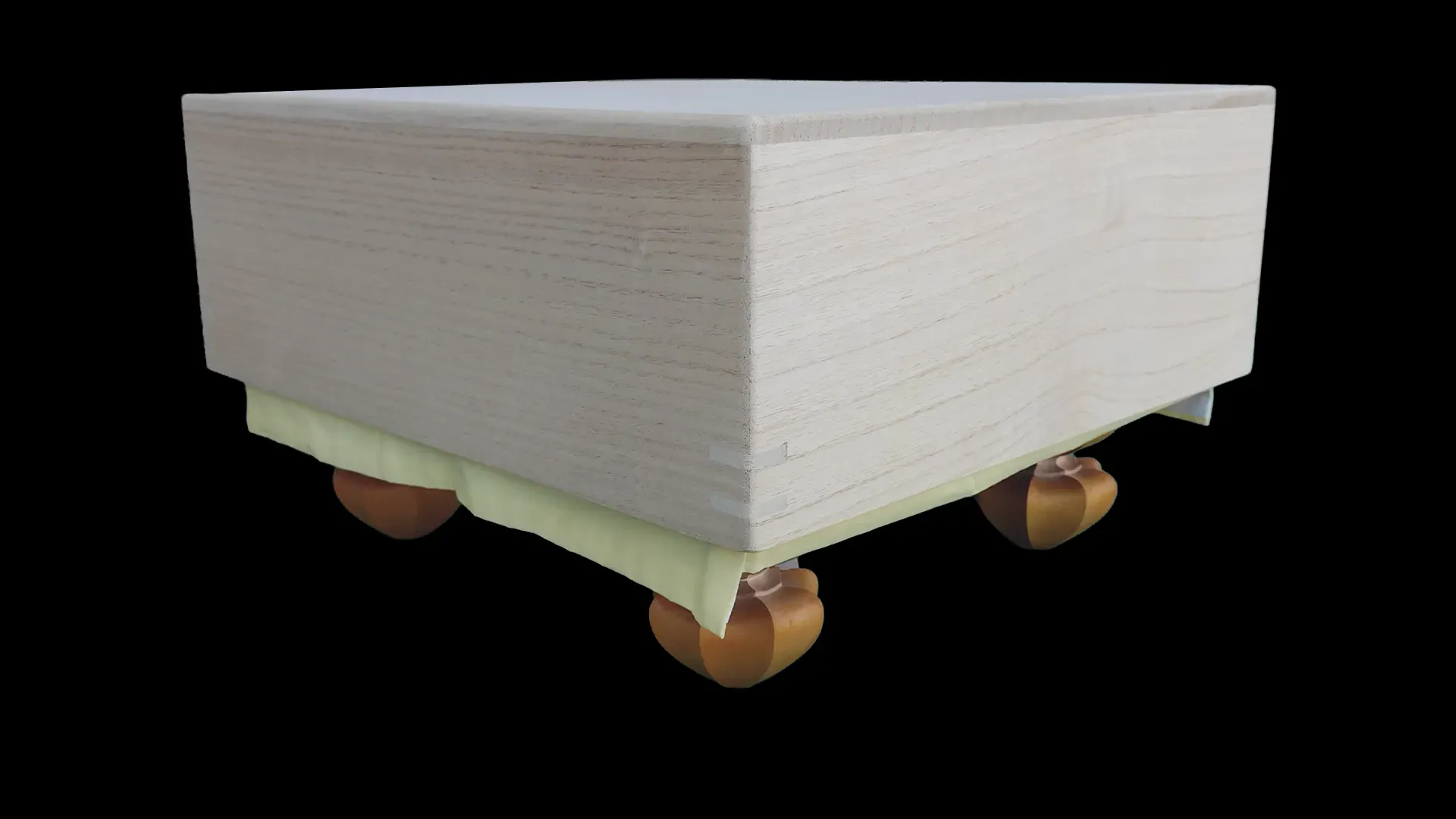
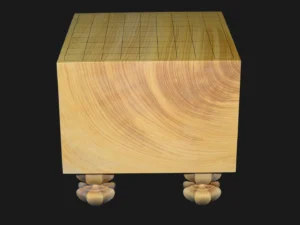
7-sun Shogi Floor Board (with legs) – Aya Forestry Office Kaya, Single-piece, Straight-grain ( Item No. S1)
¥3,000,000
About the Wood
This board is made from a single plank of kaya harvested from the Aya National Forest in Miyazaki Prefecture. The kaya trees growing in this region develop slowly in the steep, rocky terrain of the Kyushu mountain range, enduring wide swings in temperature between seasons. This slow growth produces tightly packed growth rings, a deep resinous warmth, and a fragrance unlike kaya grown elsewhere. The character of this wood is fundamentally different from other origins. At Kumasu Go Board Studio, Aya National Forest kaya is considered the finest material available for shogi boards. This particular plank was selected as the best piece currently in the workshop.
About the Construction
This is a single-plank board, cut from one log without any lamination. The natural character of the wood — its grain, its color, its individual quality — appears directly on the playing surface. Producing a single-plank board at 7-sun thickness requires a log of exceptional girth and age. Not many trees can provide that.
About the Straight Grain
This board is cut in masame, the straight-grain method, where the log is cut toward the center to produce parallel lines running the full length of the board. The grain here is fine and uniform. Fine grain is a sign of slow growth — of a tree that took its time, accumulating density over many years. The evenness of the lines reflects that patience.
Color and Aging
The board has a strong reddish tone throughout. This is characteristic of Aya National Forest kaya, where the wood is rich in natural resin. With use, the color will deepen gradually toward a warm amber. The red you see now is where the journey begins. Over the years, the tone will settle, and the surface will become richer in character.
About the Legs
The legs are carved by hand in the shape of a gardenia fruit — a form that has been part of this workshop’s tradition for generations. The gardenia in Japanese is called kuchinashi, meaning “no mouth.” The shape carries a quiet meaning: that when two players face each other across the board, no one else should speak. The legs hold that silence. Few craftsmen in Japan still carve these legs by hand.
Choosing This Board
No knots. Deep red tone. Fine, even grain. The qualities that define the finest shogi board material are all present in this piece. At 7-sun thick, the board produces a sound when pieces are placed — lower and deeper than a thinner board. Some players choose a board specifically for that resonance. Whether for an important match, or simply as a piece to keep close for many years, this board will reward a careful decision.
| Item | Details |
|---|---|
| Item No | S1 |
| Type | Shogi Floor Board |
| Wood | Kaya |
| Origin | Aya National Forest Kaya |
| Construction | Single Plank |
| Grain | Straight Grain (Masame) |
| Thickness | 7-sun |
| Color Tone | Red |
| Grain Pattern | Fine |
| Knots | None |
Each board is one of a kind.
Please contact us before placing an order to confirm availability.
For orders shipped outside Japan, customs duties or local taxes may be charged upon delivery depending on the destination country.
You May Also Consider
-
6-sun Shogi Floor Board – Kyushu Kaya, Single-piece, Straight-grain cut ( Item No. T4)
¥200,000 Add to cart -
7.2-sun Shogi Floor Board – Kyushu Kaya, Single-piece, Straight-grain cut ( Item No. K-472)
¥650,000 Add to cart -
2-sun Shogi Table Board – Kyushu Kaya Four-piece laminated
¥40,000 Read more -
7.5-sun Shogi Floor Board – Kyushu Kaya, Single-piece, Straight-grain cut ( Item No. K81)
¥750,000 Add to cart