
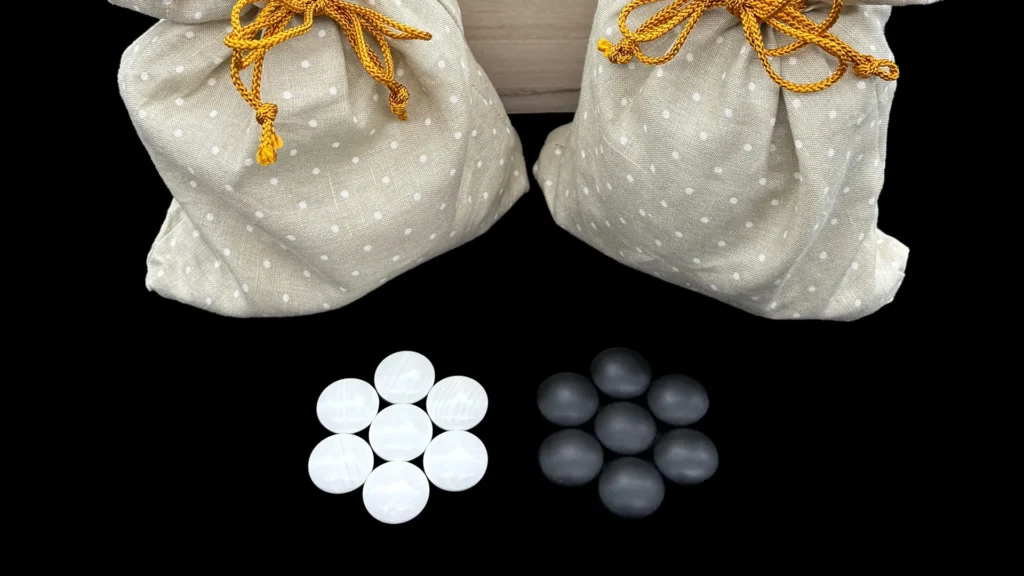
About Go Stones
A set of Go stones consists of black stones and white stones. Each color has its own material and origin, and the combination of these factors — along with stone thickness — determines the character and price of a set.
There is no need to overthink the selection. But a basic understanding of the differences will help you see clearly what each set offers.
Black Stones
Black Go stones are made from a stone called Nachi-kuro, a black argillite quarried in Kumano, Mie Prefecture. This material has been used for Go stones for centuries, and it remains the standard for black stones across virtually all sets available today.
In recent years, the number of craftspeople processing Nachi-kuro has declined significantly. As a result, availability has tightened and prices have risen. This trend is expected to continue.
White Stones
White Go stones are carved from clam shells. The origin of the clam is the primary factor distinguishing one white stone from another.
Hyuga Clam (Okura Beach, Hyuga)
The clams once harvested at Okura Beach in Hyuga, Miyazaki Prefecture, have long been considered the finest material for white Go stones. The shell has a fine, dense texture, with exceptional whiteness and natural luster. Today, these clams are no longer harvested in meaningful quantities. Only a small number of sets made from Hyuga clams remain in circulation.
Mexican Clam
As Hyuga clams became scarce, Mexican clam shells became the primary alternative. However, since the 2000s, environmental regulations and import restrictions in Mexico have significantly limited the supply of raw material. Prices have risen to more than three times pre-restriction levels, and stable procurement remains difficult. Mexican clam stones, too, are becoming less readily available than they once were.
The question is less about which origin is superior, and more about what matters to you.
Quality Grades
Clam Go stones are graded by quality. The most common grades are Yuki-in and Tsuki-in.
| Grade | Description |
|---|---|
| Yuki-in (Snow) | Highest grade. Superior whiteness, fine texture, and uniformity |
| Tsuki-in (Moon) | Second grade. Fully adequate quality for regular play |
| Hana-in (Flower) | Entry grade. Practical quality with no issues for everyday use |
As the grade increases, the whiteness and consistency of the stones become more pronounced.
Thickness (Go Number)
Stone thickness is measured in a Japanese unit called “go” (号). A higher number means a thicker stone.
| No. | Thickness | Notes |
|---|---|---|
| No. 32 | approx. 8.8 mm | Thin |
| No. 36 | approx. 10.1 mm | Standard |
| No. 37 | approx. 10.4 mm | Standard to slightly thick |
| No. 38 | approx. 10.7 mm | Thick |
| No. 40 | approx. 11.3 mm | Thicker |
| No. 42 | approx. 11.8 mm | Quite thick |
| No. 45 | approx. 12.7 mm | Extra thick |
Thickness affects the feel of play and the space required in the Go bowl. Please check the opening diameter of your bowl before selecting a thickness.
A standard set contains 181 white stones and 182 black stones, with one spare stone of each color included.
Repaired Sets
We also carry Go stones that have been carefully polished and restored by a skilled craftsperson based in Hyuga.
These sets begin as older stones — resurfaced, missing pieces replaced, and reassembled into a complete set. They differ from new stones, but they are a practical and thoughtfully prepared option. Certificates of authenticity are not available for repaired sets. All repaired sets are clearly labeled as such in the product description.
A Note for Your Consideration
Go stones offer more combinations than Go boards, and the options can seem complex at first. In practice, most decisions come down to three factors: origin, grade, and thickness.
Your choice will naturally narrow based on the board and Go bowls you use, and how much importance you place on the stones themselves. If you are unsure, please feel free to contact us.
Go Stones
-
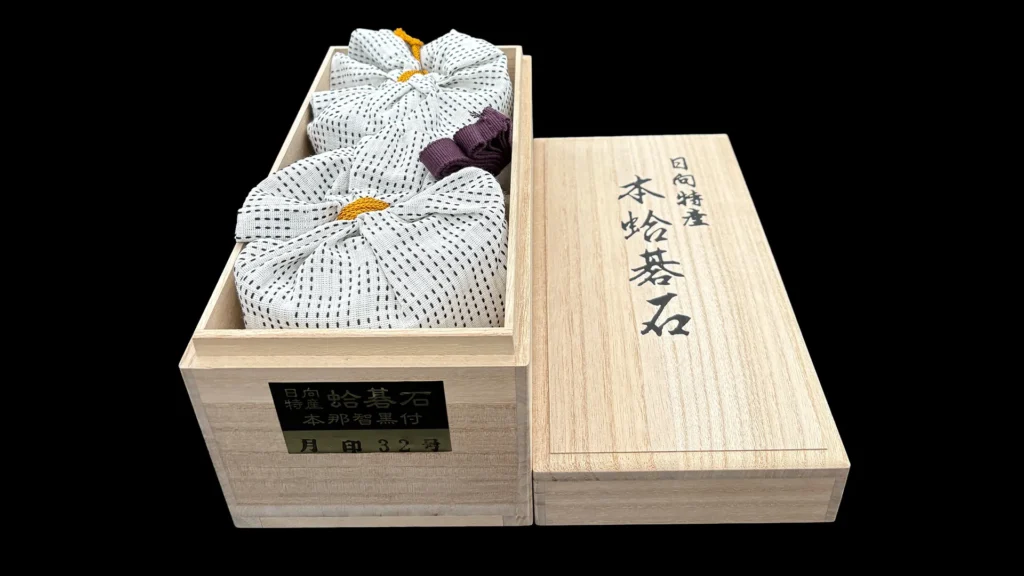
Go Stones – Hyuga Okura Beach Clam, Tsuki-in (Moon Grade), No. 32 (8.8 mm), Repaired Set
¥200,000 -
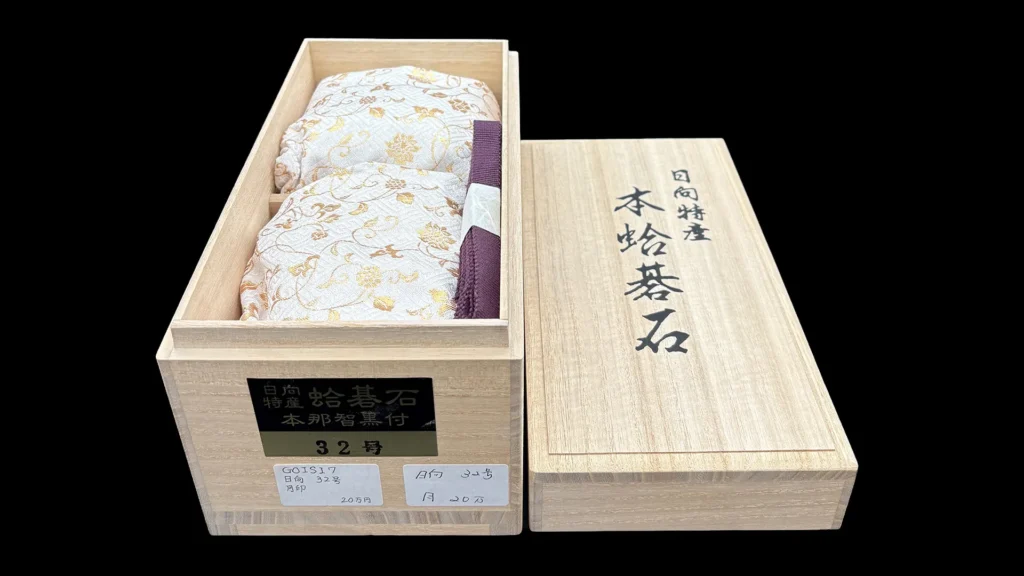
Go Stones – Hyuga Okura Beach Clam, Tsuki-in (Moon Grade), No. 32 (8.8 mm), Repaired Set
¥200,000 -
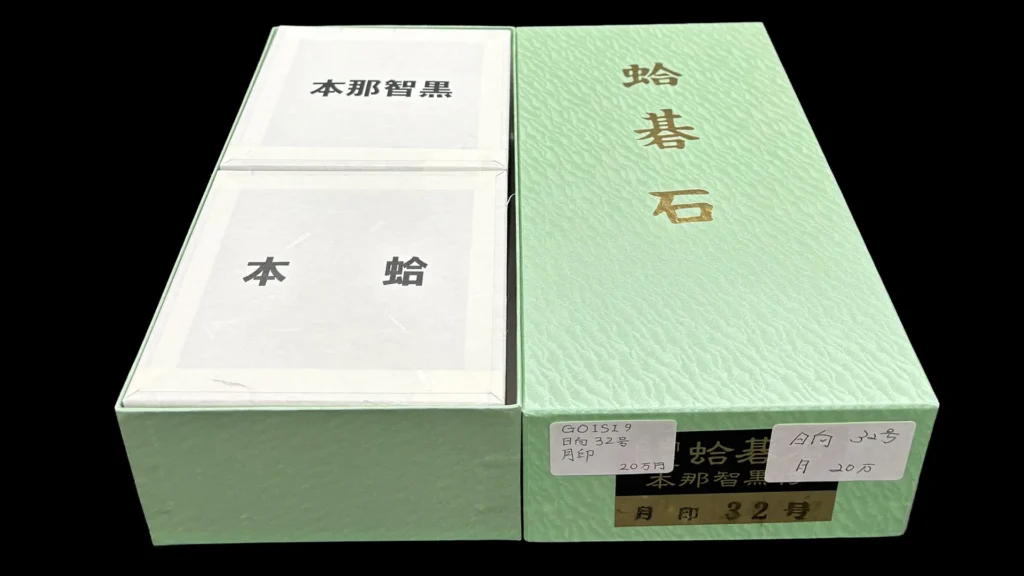
Go Stones – Hyuga Okura Beach Clam, Tsuki-in (Moon Grade), No. 32 (8.8 mm), Repaired Set
¥200,000 -

Go Stones – Hyuga Okura Beach Clam, Yuki-in (Snow Grade), No. 37 (10.4 mm), with Certificate
¥5,000,000 -
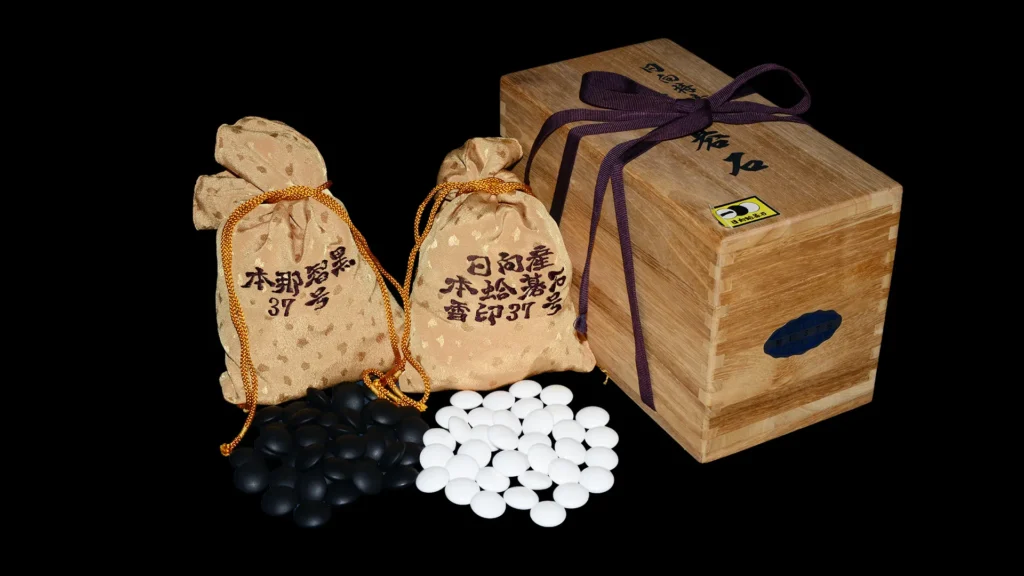
Go Stones – Hyuga Okura Beach Clam, Yuki-in (Snow Grade), No. 38 (10.7 mm), with Certificate
¥7,500,000 -
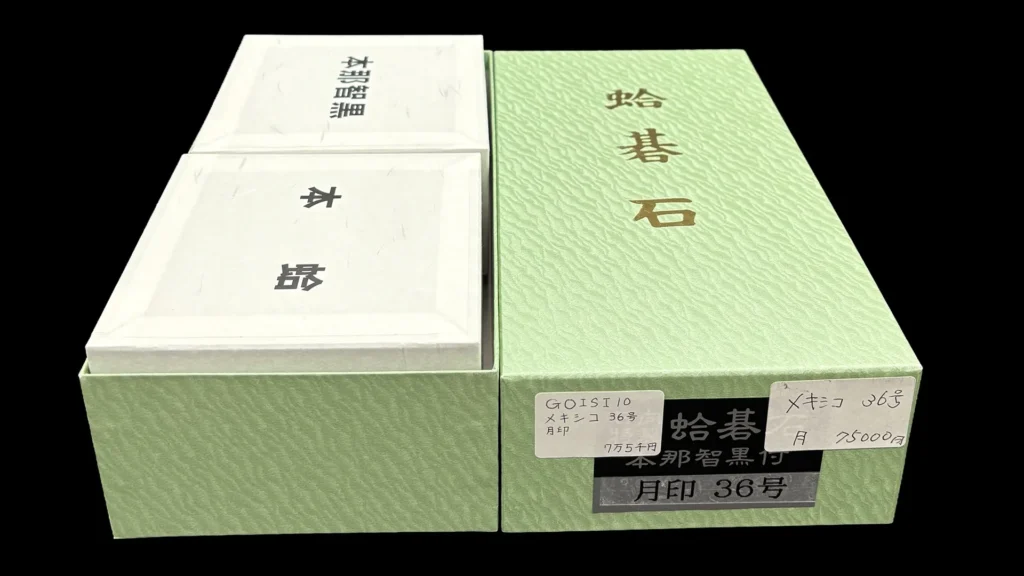
Go Stones – Mexican Clam, Tsuki-in (Moon Grade), No. 36 (10.1 mm), Repaired Set
¥75,000 -
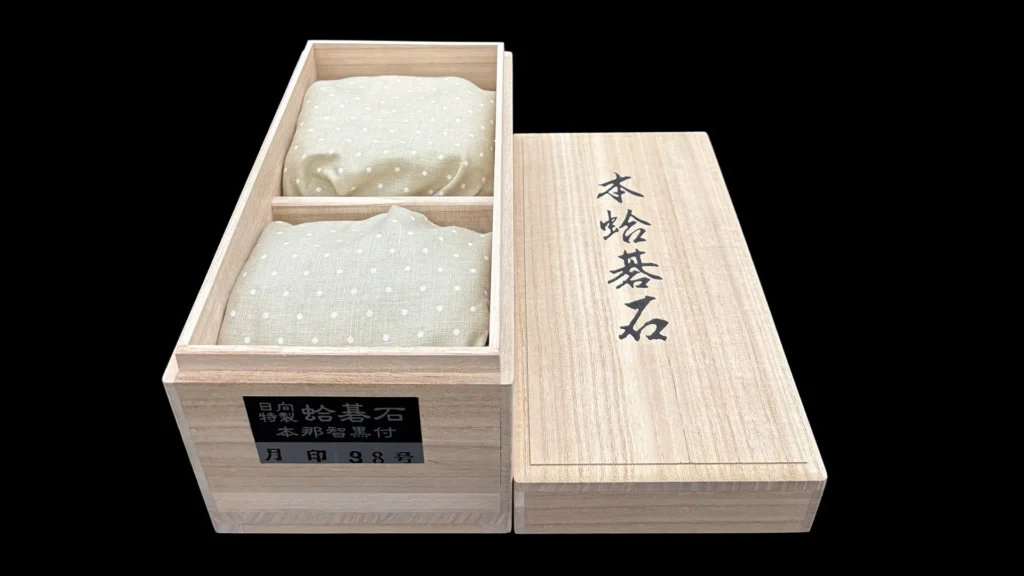
Go Stones – Mexican Clam, Tsuki-in (Moon Grade), No. 38 (10.7 mm), Repaired Set
¥85,000 -
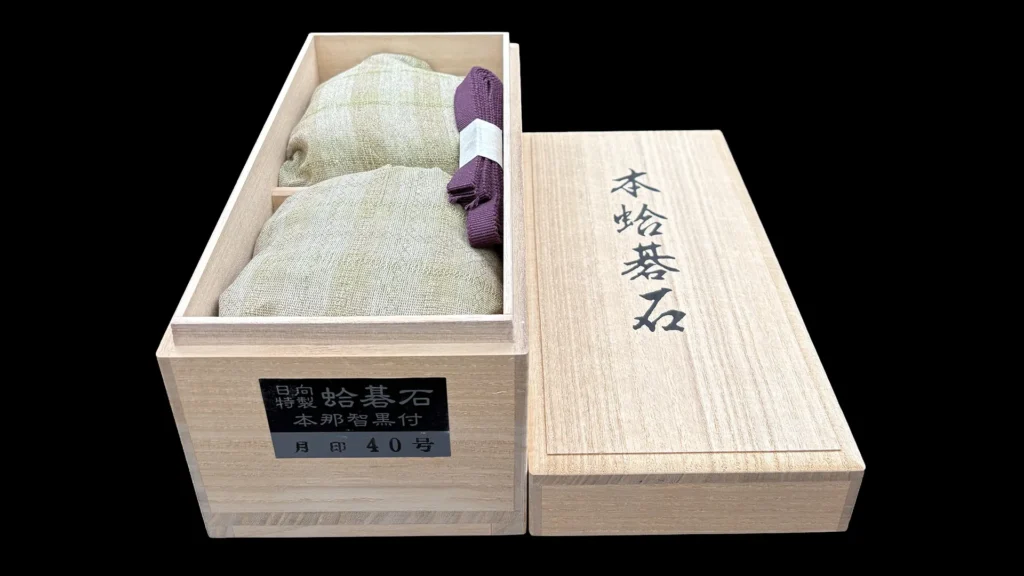
Go Stones – Mexican Clam, Tsuki-in (Moon Grade), No. 40 (11.3 mm), Repaired Set
¥100,000 -
Go Stones – Mexican Clam, Yuki-in (Snow Grade), No. 37 (10.4 mm), Repaired Set
¥150,000