Some of our kaya Go and shogi boards are made from the same wood, in the same way, as our other boards. However, because of how they look, we do not offer them at our usual price. We call these boards with minor defects. For each board, we describe the reason for the lower price and show it in the photos.
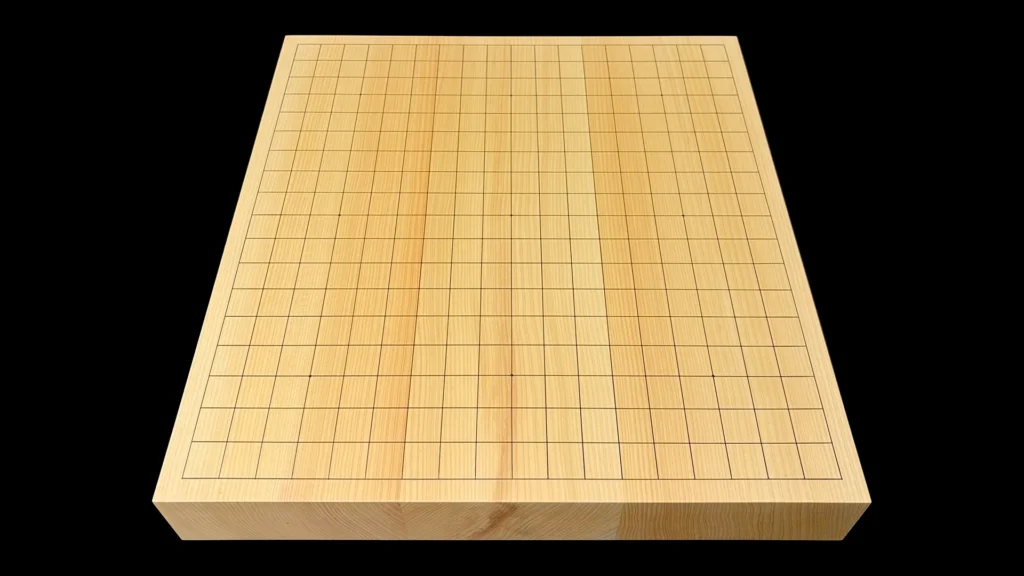
What “Wakeari” Means
In Japanese, these boards are called wakeari. The word means “there is a reason.” In Japan, goods offered at a lower price for a stated reason are often sold under this name. The reason is shared openly, so that buyers can decide for themselves.
We follow the same approach. On each product page, we explain why the price is lower, where the defect is on the board, and whether it affects play.
Why These Boards Exist
Kaya boards are cut from a log. For our higher-priced boards, we cut and re-cut the log many times so that knots do not appear on the playing surface. The best parts of the log go to those boards first.
The last part of the log is also made into boards. These boards may have more knots or coarser grain. About one or two boards in every twenty turn out this way.
We also include two other kinds of boards. One is a board with a noticeable blue stain. The other is a laminated board whose grain or knots do not meet our usual standard.
Customers often choose boards with no knots and even grain. As a result, these boards tend to remain with us.
The Main Reasons, and What They Mean for Play
There are four main reasons. A single board may have more than one. The second photo on each product page shows the defect.
Knots
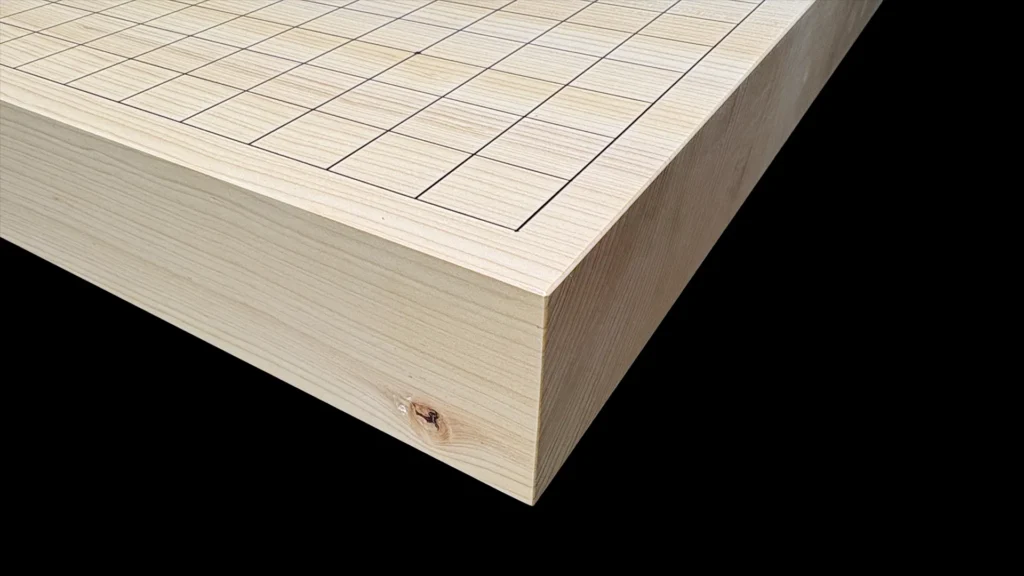
A knot is the mark left where the base of a branch was absorbed into the trunk as the tree grew. Knots can appear on the playing surface, the sides, or the underside. A board with minor defects has many knots, or a knot in a noticeable place. Each product page states whether the knots affect play. Over the years, kaya gradually turns a warm amber color. As it does, the color difference around a knot fades little by little.
Coarse Grain
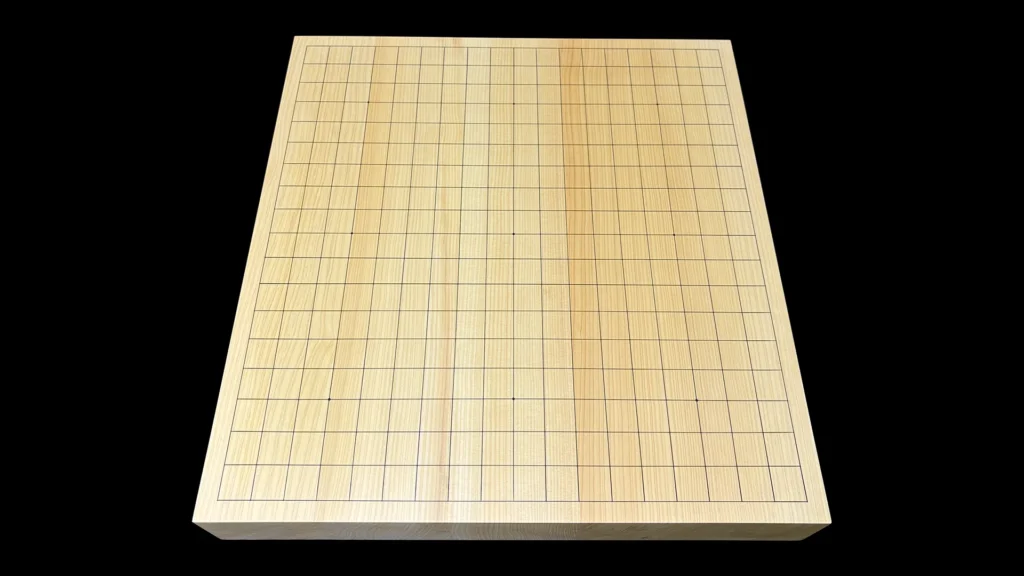
On some boards, the width of the growth rings varies across the surface. This gives the grain a coarse, uneven look. It reflects the conditions in which the tree grew. This is a difference in appearance only. It does not affect the strength of the board, the feel of play, or the grid lines.
Blue Stain
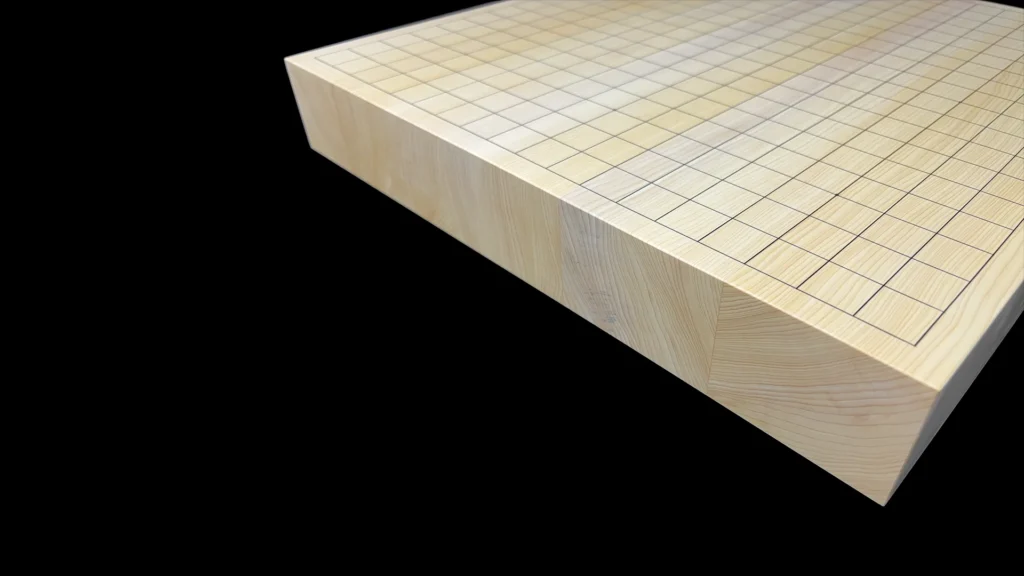
A blue stain is a bluish discoloration that forms when moisture enters the wood. It can appear in any part of a log, including the best parts. It is a change in color only. It does not affect the strength of the board or the feel of play. As the whole board turns amber over the years, the blue stain becomes less visible.
Lamination
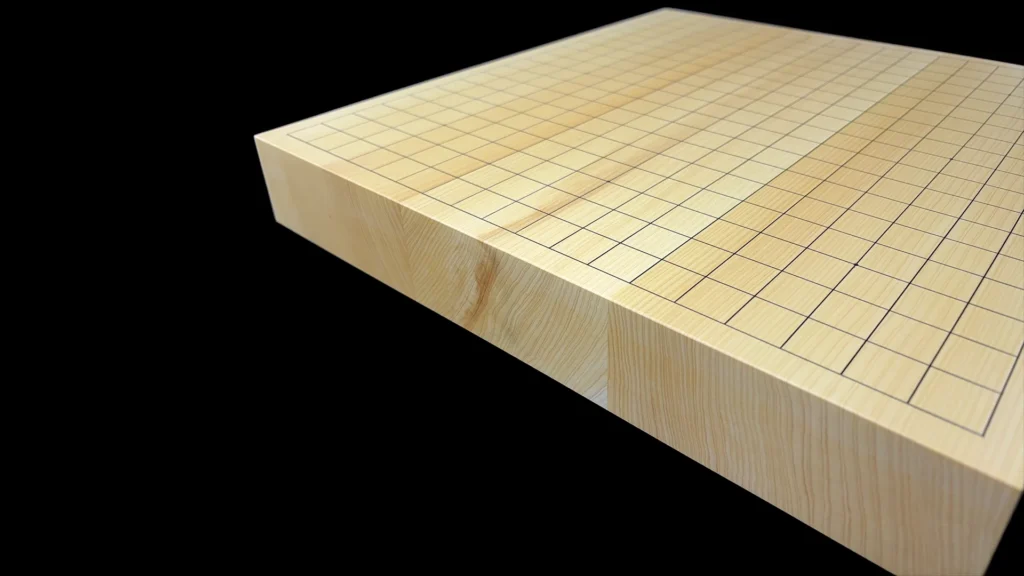
A laminated board (hagi-ban) is made by joining several pieces of wood into a single playing surface. The pieces come from the log as boards are cut from it. We align each joint with a grid line, so the joints do not interfere with play. Many of our regular boards are also laminated. We decide whether a laminated board has minor defects by how even its grain is and how its knots appear. The number of pieces is not the deciding factor.
Same Wood, Same Making
Boards with minor defects are made from the same kaya as our other boards. They are made in the same way. The only difference is the appearance described above.
Some of our regular boards also have small knots or blue stain. A board with minor defects has more of them, or has them in more noticeable places. On each product page, we name a comparable regular board by item number and price, so that you can compare the two.
You can see our regular boards here:
Available Boards
Boards that have been sold remain in the list as a record. More boards will be added as they are photographed.
Go Boards with Minor Defects
-
2-sun Go Table Board – Kyushu Kaya, 3-piece laminated, Straight-grain cut – Minor Defects ( Item No. GTW4 )
¥30,000 View Details -
2-sun Go Table Board – Kyushu Kaya, 3-piece laminated, Straight-grain cut – Minor Defects ( Item No. GTW3 )
¥30,000 View Details -

2.15-sun Go Table Board – Kyushu Kaya, 5-piece laminated, Straight-grain cut – Minor Defects ( Item No. GTW2 )
¥30,000 View Details -
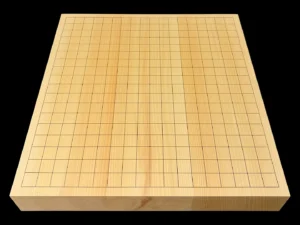
2-sun Go Table Board – Kyushu Kaya, 3-piece laminated, Straight-grain cut – Minor Defects ( Item No. GTW1 )
¥30,000 View Details
Shogi Boards with Minor Defects (with Piece Stands)
-
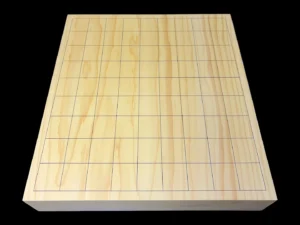
2.15-sun Shogi Table Board – Kyushu Kaya, Single-piece, Flat-grain cut (back face) – Minor Defects ( Item No. STW3 )
¥25,000 View Details -
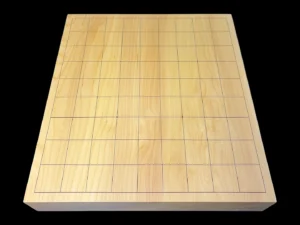
2-sun Shogi Table Board – Kyushu Kaya, Single-piece, Flat-grain cut (back face) – Minor Defects ( Item No. STW2 )
¥25,000 View Details -
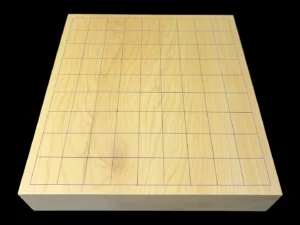
2.3-sun Shogi Table Board – Kyushu Kaya, Single-piece, Flat-grain cut (back face) – Minor Defects ( Item No. STW1 )
¥25,000 View Details
Ordering from Outside Japan
We ship our boards outside Japan. Each board is one of a kind. Please contact us before placing an order, and include the item number of the board. We will confirm that the board is available and let you know the shipping cost to your country. For orders shipped outside Japan, customs duties or local taxes may be charged upon delivery, depending on the destination country.
Frequently Asked Questions
-
Do the defects affect play?
-
Each product page has a section called “Effect on Use.” It describes how the defect affects each board. If a defect does affect use, we say so.
-
What happens to the defects over time?
-
Kaya turns a warm amber color over the years. As it does, blue stain and the color difference around knots gradually fade. Coarse grain and the joints of a laminated board do not change.
-
Can I return or exchange a board?
-
The price of each board reflects the reason described on its product page. It also reflects other differences in appearance that come from the nature of the wood, such as stains, knots, resin pockets, and uneven color. We may not be able to show every such spot in the description or photos. For this reason, we are unable to accept returns or exchanges based on these points. If the board is damaged during shipping, or has a defect that affects its use, such as a crack or a chip, please contact us within two weeks of delivery. The timing of a refund depends on the payment method.
-
What comes with a shogi board?
-
Each shogi board with minor defects comes with piece stands (komadai). Piece stands are small stands that hold the pieces captured during a game. Shogi pieces are not included.
-
Why not call them “sale” or “outlet” boards?
-
We want the reason for the lower price to be clear to everyone. For that reason, we describe each board’s reason one by one, and call them boards with minor defects.
Care and Repair
A board with minor defects is cared for in the same way as our other boards. Please keep it out of direct sunlight and away from the direct flow of air conditioning. Avoid sudden changes in humidity and very dry air. After use, wiping it lightly with a soft cloth is enough. A board may bend or straighten very slightly with the seasons. This is the natural movement of wood.
Marks and dullness that build up over years of use can sometimes be removed by replaning the surface. However, depending on the condition of the board, we may not be able to accept this work. This includes some laminated boards. Please send us photos of the board first, and we will let you know what is possible.