About Go Bowls
A Go bowl — called a goke in Japanese — is the container used to hold Go stones during play. One bowl holds the white stones, the other the black. They sit beside the board throughout the game, quietly present at every move.
Go bowls are often chosen to complement the board and stones. But many players select them for their own material and character — as objects worth choosing on their own terms.
Shape
Go bowls come in two main shapes.
Honinbo Shape
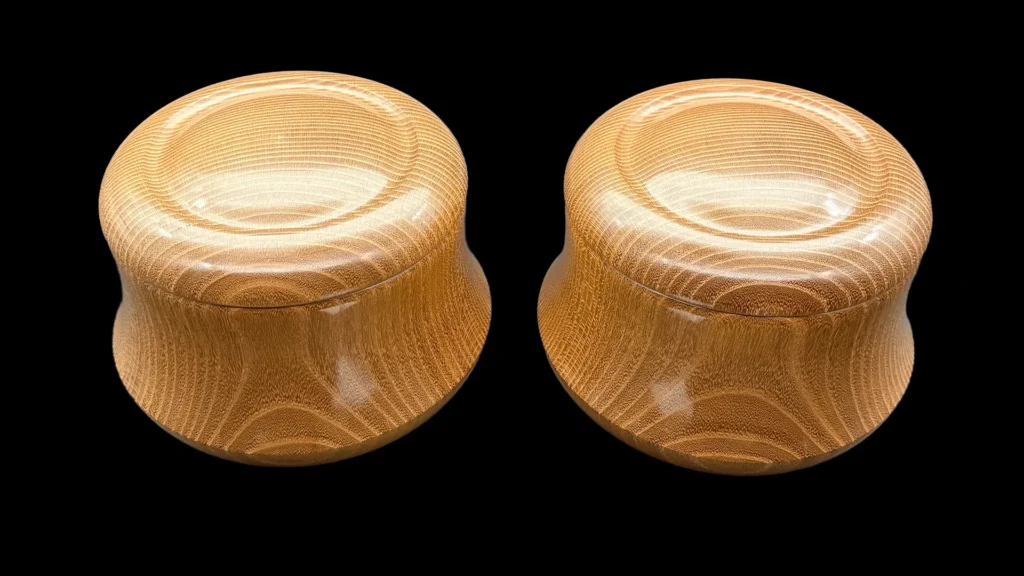
A rounded, dome-shaped lid. The traditional form, used for centuries. The slightly inward-curving opening makes it easy to reach in and take a stone.
Standard Shape
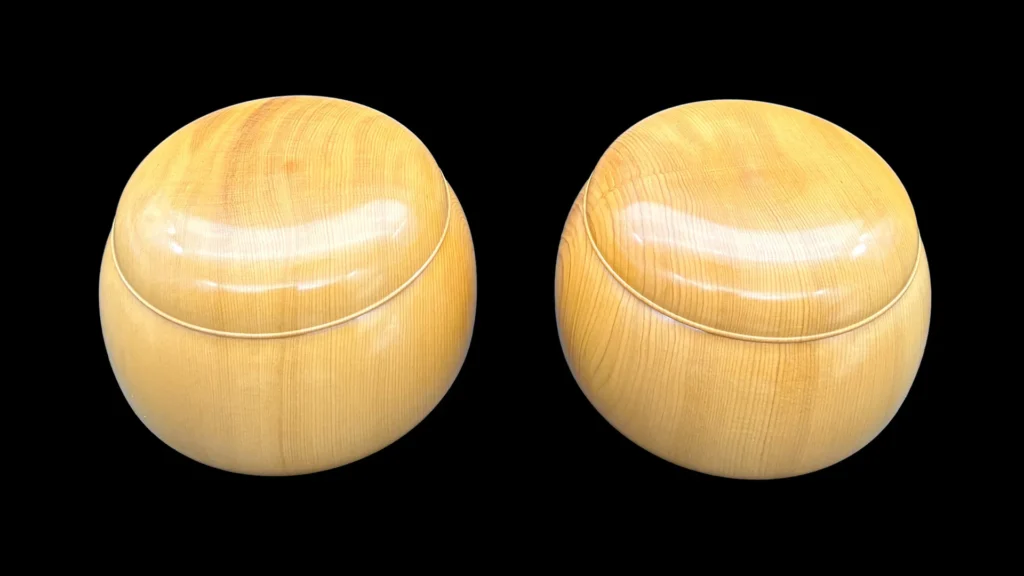
A flatter lid with a cleaner, more understated silhouette. Sits compactly beside the board. A matter of preference — neither shape is considered superior.
Materials
The bowls we carry are made from four materials, each with its own character.
| Material | Character |
|---|---|
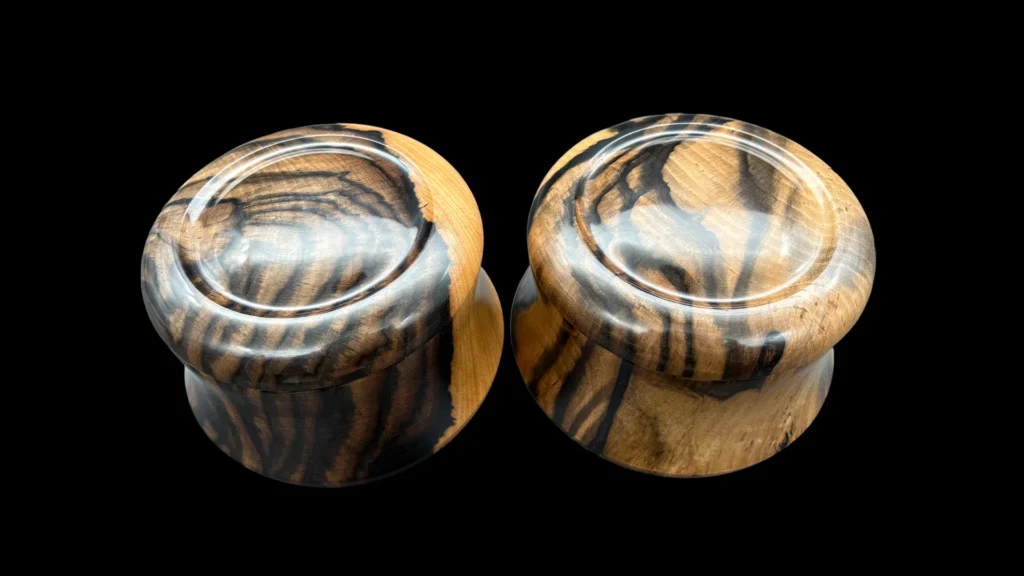
| Kurogaki (Black Persimmon) | Exceptionally rare. Striking black-and-white figuring unique to each piece |
| Mulberry | Dense and heavy. Develops a deep, settled luster with use |
| Kaya | The same wood used in fine Go and shogi boards. Warm tone, smooth texture |
| Hyuga Kaya | Kaya grown in Miyazaki. Fine grain, quiet fragrance, amber patina over time |
Kurogaki (Black Persimmon)
Kurogaki is persimmon wood that has developed a rare black figuring in its interior over hundreds of years of growth. The contrast between white and black is dramatic and entirely natural — no two pieces are alike. It has long been regarded as one of the most unusual and prized woods in Japanese craft.
Mulberry
Mulberry is one of the most widely respected materials for Go bowls among serious players. It is exceptionally dense, with a satisfying weight in the hand. The surface deepens and gains luster over years of handling — a material that rewards long use.
Kaya
Kaya (Japanese nutmeg-yew) is the traditional material for the finest Go and shogi boards. As a bowl material, it offers a smooth, slightly oily texture and a calm yellow-toned color that deepens to a warm amber over time. Sturdy and familiar to anyone who plays on a kaya board.
Hyuga Kaya
Hyuga Kaya refers specifically to kaya grown in the mountains of Miyazaki Prefecture in southern Kyushu. Growing slowly on rocky terrain over centuries, the grain is especially fine and dense. The wood has a distinctive, clean fragrance and a surface that becomes richer with use. Raw material has become increasingly difficult to source, and pieces made from Hyuga Kaya are correspondingly scarce.
Opening Size and Go Stone Compatibility
Go bowl openings are measured in sun, a traditional Japanese unit (1 sun ≈ 3.03 cm). The opening must be wide enough to comfortably fit the stones you use.
Stone thickness is measured in a unit called go (号). A higher number means a thicker stone. If the opening is too narrow, the stones won’t fit; if too wide, they move around and become harder to pick up.
| Item No. | Material | Shape | Opening | Fits Stones Up To |
|---|---|---|---|---|
| GOK1 | Kurogaki | Honinbo | 4-sun | No. 35 |
| GOK2 / GOK3 | Mulberry | Honinbo | 4.4-sun | No. 40 |
| GOK4 / GOK5 | Kaya | Standard | 4.3-sun | No. 45 |
| GOK6 | Hyuga Kaya | Standard | 4.1-sun | No. 40 |
| GOK7 | Hyuga Kaya | Honinbo | 4.4-sun | No. 40 |
| GOK8 | Hyuga Kaya | Standard | 5.2-sun | No. 50 |
If you are unsure which size suits your stones, please feel free to contact us.
About the Craftsman
The Go bowls we carry are made by Nishikawa Takashi, a lathe woodworker based in Miyakonojo, Miyazaki Prefecture. Nishikawa holds the title of Miyazaki Traditional Craftsman (宮崎県伝統工芸士), recognized in 1999.
He entered the craft at age twenty and has been working with wood for over fifty years. Lathe turning leaves no room for correction — each piece is shaped in a single continuous process. The interior hollowing, which requires precise pressure applied entirely by feel, remains the most demanding part of the work. Each finished bowl is polished with carnauba wax to bring out the natural grain and color of the wood.
Every bowl made by Nishikawa is marked with his craftsman’s seal on the base, and comes with a certificate of authenticity.
A Note for Your Consideration
Go bowls are often chosen after the board and stones are decided — but some players choose the bowls first, drawn to a particular material or form. Either way is reasonable.
The main practical consideration is opening size relative to your stones. Beyond that, the choice is largely one of what feels right to hold and look at over a long period of time. If you have questions, please contact us.
Go Bowls
-
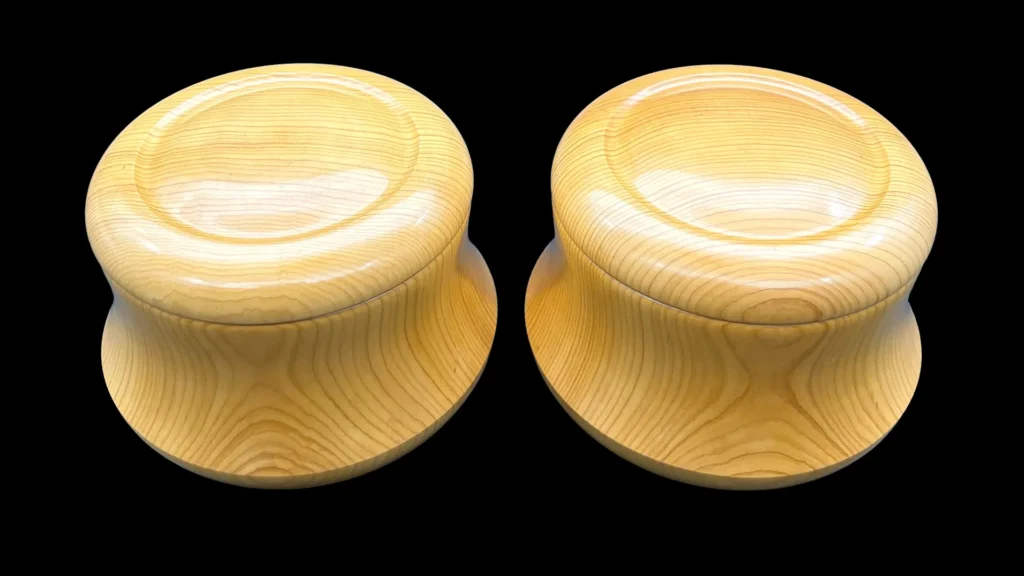
Go Bowl – Hyuga Kaya, Honinbo Shape, 4.4-sun Opening, by Nishikawa Takashi
¥100,000 -
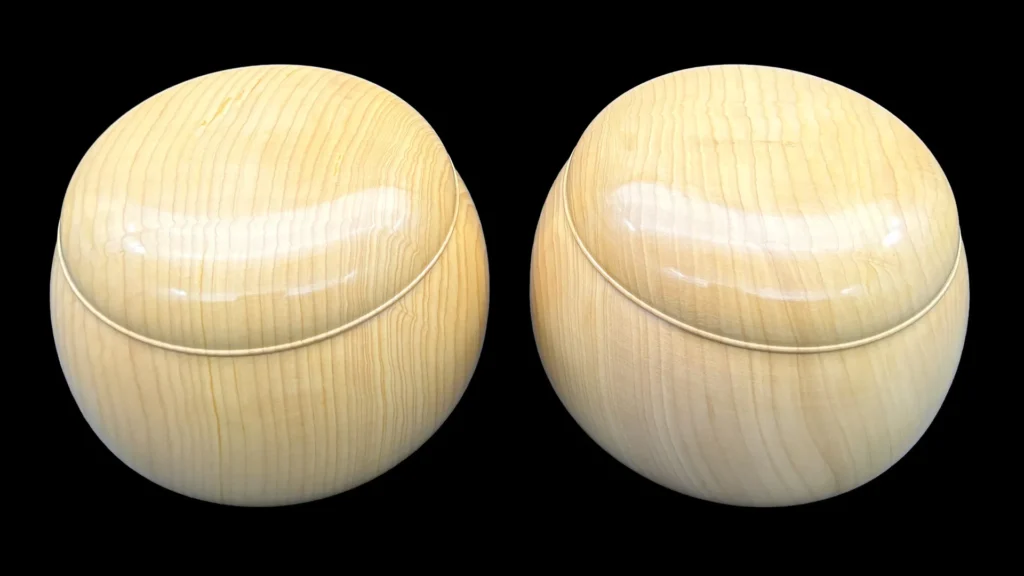
Go Bowl – Hyuga Kaya, Standard Shape, 4.1-sun Opening, by Nishikawa Takashi
¥90,000 -
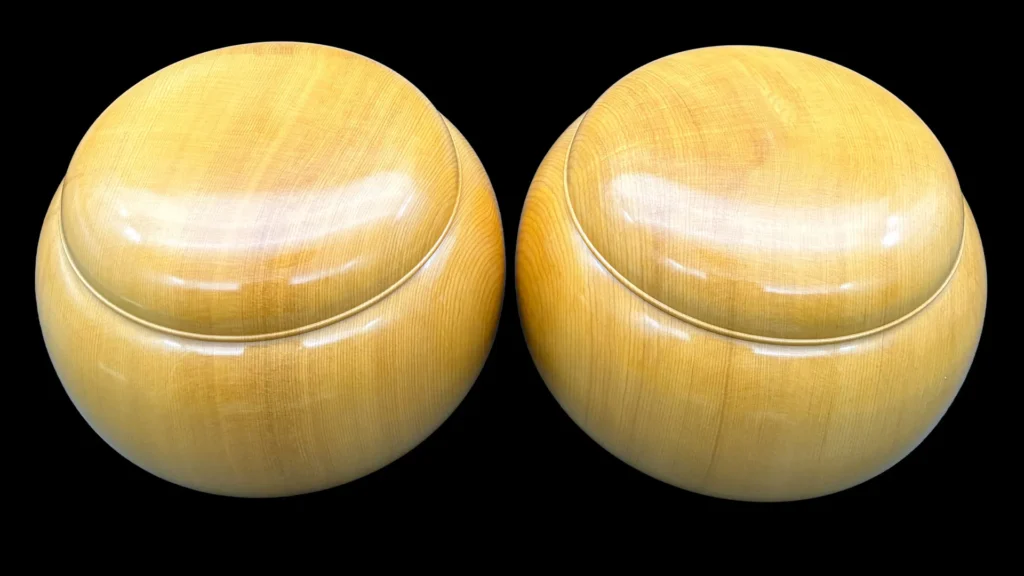
Go Bowl – Hyuga Kaya, Standard Shape, 5.2-sun Opening, by Nishikawa Takashi
¥170,000 -
Go Bowl – Kaya, Standard Shape, 4.3-sun Opening, by Nishikawa Takashi
¥120,000 -
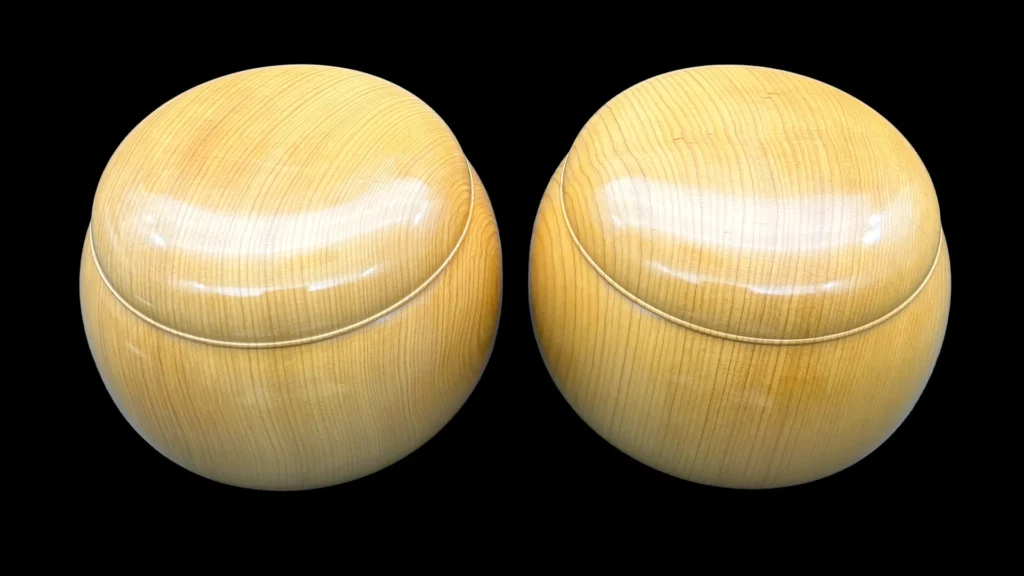
Go Bowl – Kaya, Standard Shape, 4.3-sun Opening, by Nishikawa Takashi
¥120,000 -
Go Bowl – Kurogaki, Honinbo Shape, 4-sun Opening, by Nishikawa Takashi
¥550,000 -
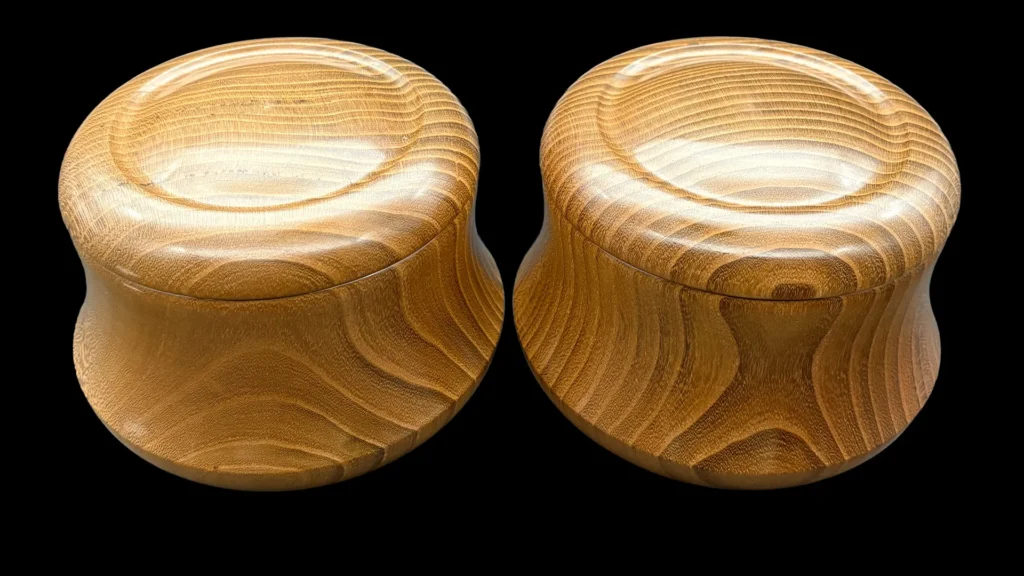
Go Bowl – Mulberry, Honinbo Shape, 4.4-sun Opening, by Nishikawa Takashi
¥80,000