※Because natural wood is used, the grain pattern and color may vary from piece to piece.
※Actual color may differ slightly depending on your monitor settings.
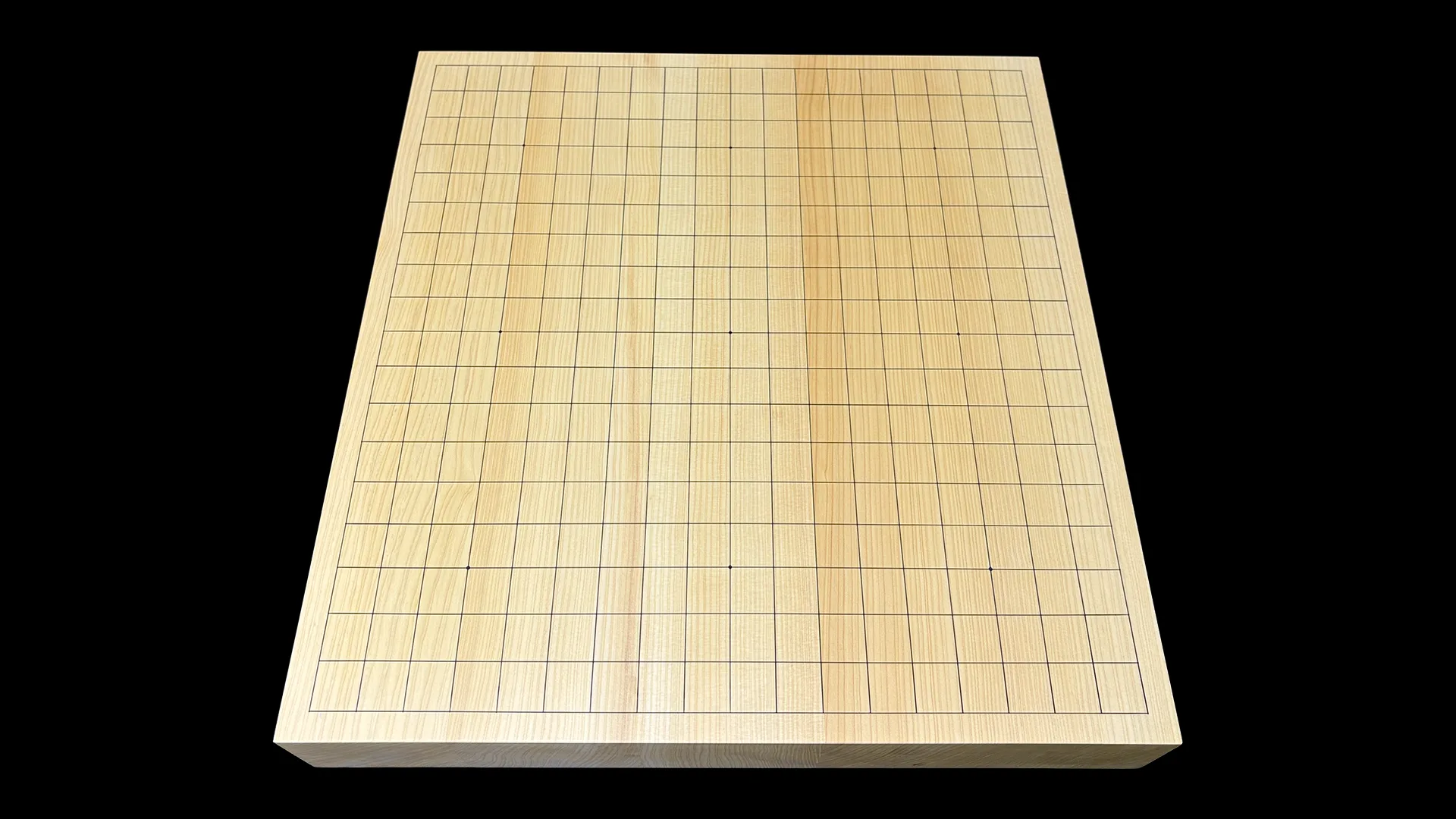
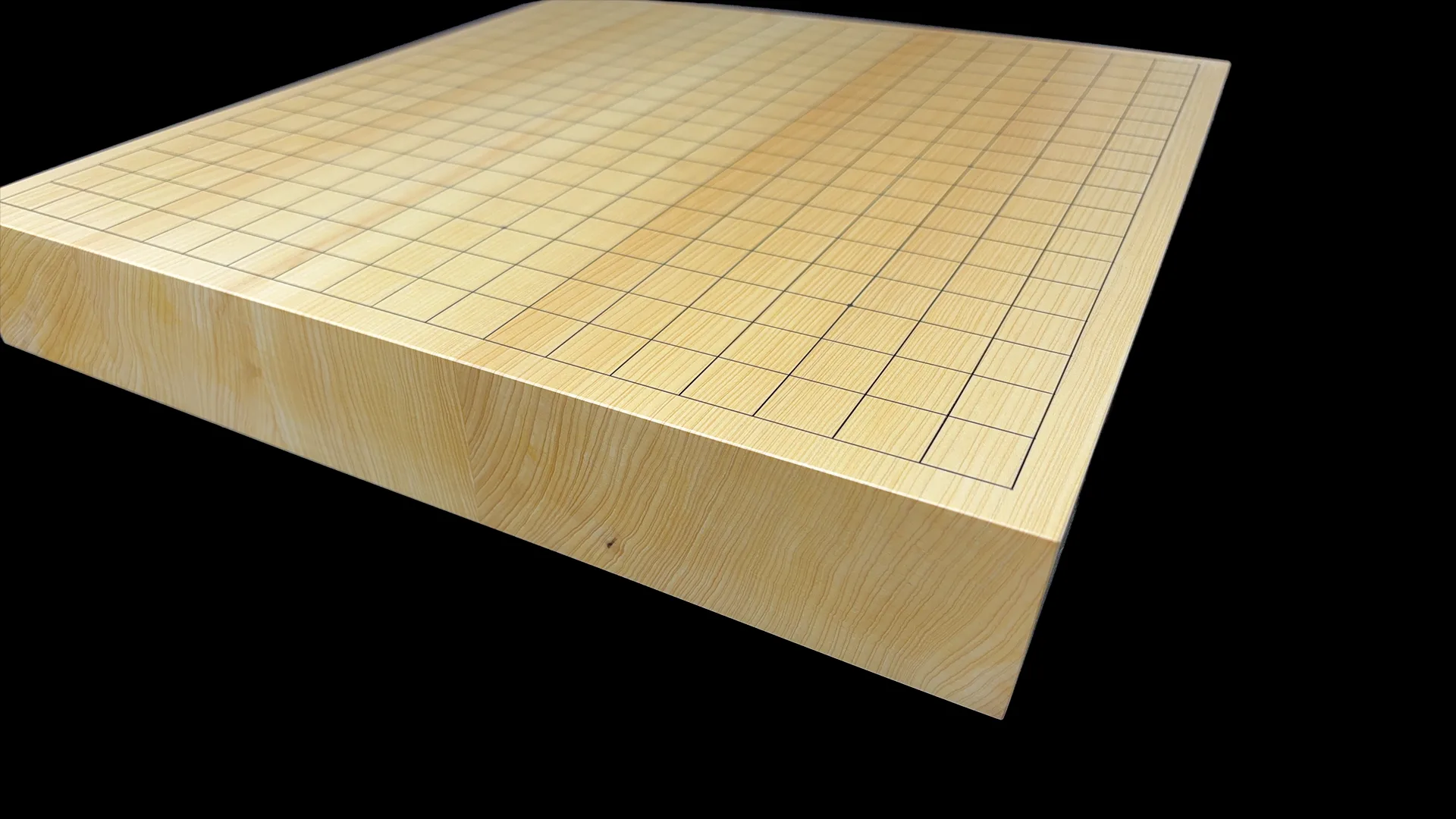
2-sun Go Table Board – Kyushu Kaya, 3-piece laminated, Straight-grain cut – Minor Defects ( Item No. GTW4 )
¥30,000
About Boards with Minor Defects
For our higher-priced boards, we cut and re-cut the log many times so that knots do not appear on the playing surface. As a result, the last part of each log yields some boards with more knots or coarser grain. We also include boards with noticeable blue stain, and laminated boards whose grain or knots do not meet our usual standard. All of these boards are made from the same kaya, in the same way as our other boards. The reason for the lower price of each board is described below. For more details, please see “Boards with Minor Defects.”
Why This Board Is Offered with Minor Defects
There is a resin pocket on the end grain, and the color of the board is slightly uneven. The end grain (koguchi) is the side face where the ends of the wood grain appear. A resin pocket (yani-tsubo) is a spot where resin collected inside the wood, and its mark appears on the surface. Uneven color means that some areas of the board are darker and others are lighter. The second and following product photos show the main spots, including the resin pocket on the end grain.
Effect on Use
The resin pocket is on the end grain, not on the playing surface, so it does not affect play. The uneven color is a difference in color only. It does not affect the strength of the board, the feel of play, or the grid lines.
About the Wood
This board is made from kaya grown in Kyushu, in southern Japan. Kaya has long been used for Go and shogi boards. It is valued for its moderate elasticity and the soft sound it makes when a stone is placed.
About the Construction
This is a laminated board made from three planks joined together. A laminated board (hagi-ban) is made by joining several planks into a single playing surface. The joints are aligned with the grid lines of the board.
Thickness and Feel
The board is 2-sun thick (approximately 6.1 cm). This is a standard thickness for a table board. Its size and weight make it easy to use on a desk or table.
Aging
Over the years, kaya gradually turns a warm amber color. In the craftsman’s assessment, the uneven color will become less visible as this happens.
About the Price
A comparable board in our shop, a 2-sun Kyushu kaya table board with straight grain (Item No. GT3), is offered at ¥50,000. Because of the resin pocket on the end grain and the uneven color, this board is offered at ¥30,000.
Choosing This Board
The board has a yellow tone, few knots, and straight grain. If the resin pocket and the uneven color do not concern you after checking them in the photos, this board is well suited to everyday games and to replaying game records.
Returns and Exchanges
The price of this board reflects the resin pocket on the end grain and the uneven color described above, as well as other differences in appearance that come from the nature of the wood, such as stains, knots, resin pockets, and uneven color. We may not be able to show every such spot in the description or photos. For this reason, we are unable to accept returns or exchanges based on these points. If the board is damaged during shipping, or has a defect that affects its use, such as a crack or a chip, please contact us within two weeks of delivery. The timing of a refund depends on the payment method.
| Item | Details |
|---|---|
| Item No | GTW4 |
| Type | Go Table Board |
| Wood | Kaya |
| Origin | Kyushu Kaya |
| Construction | 3-Piece Laminated |
| Grain | Straight Grain (Masame) |
| Thickness | 2-sun |
| Color Tone | Yellow |
| Grain Pattern | Medium |
| Knots | Few |
Each board is one of a kind.
Please contact us before placing an order to confirm availability.
For orders shipped outside Japan, customs duties or local taxes may be charged upon delivery depending on the destination country.
You May Also Consider
-

2.15-sun Go Table Board – Kyushu Kaya, 5-piece laminated, Straight-grain cut – Minor Defects ( Item No. GTW2 )
¥30,000 View Details -
2-sun Shogi Table Board – Kyushu Kaya, Single-piece, Flat-grain cut (back face) – Minor Defects ( Item No. STW2 )
¥25,000 View Details -
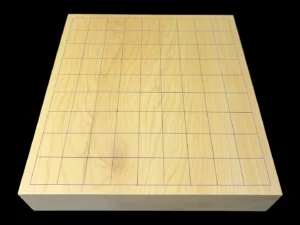
2.3-sun Shogi Table Board – Kyushu Kaya, Single-piece, Flat-grain cut (back face) – Minor Defects ( Item No. STW1 )
¥25,000 View Details -
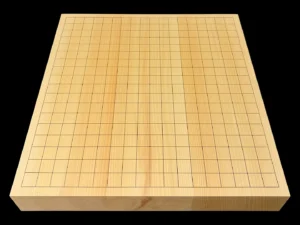
2-sun Go Table Board – Kyushu Kaya, 3-piece laminated, Straight-grain cut – Minor Defects ( Item No. GTW1 )
¥30,000 View Details