※Because natural wood is used, the grain pattern and color may vary from piece to piece.
※Actual color may differ slightly depending on your monitor settings.
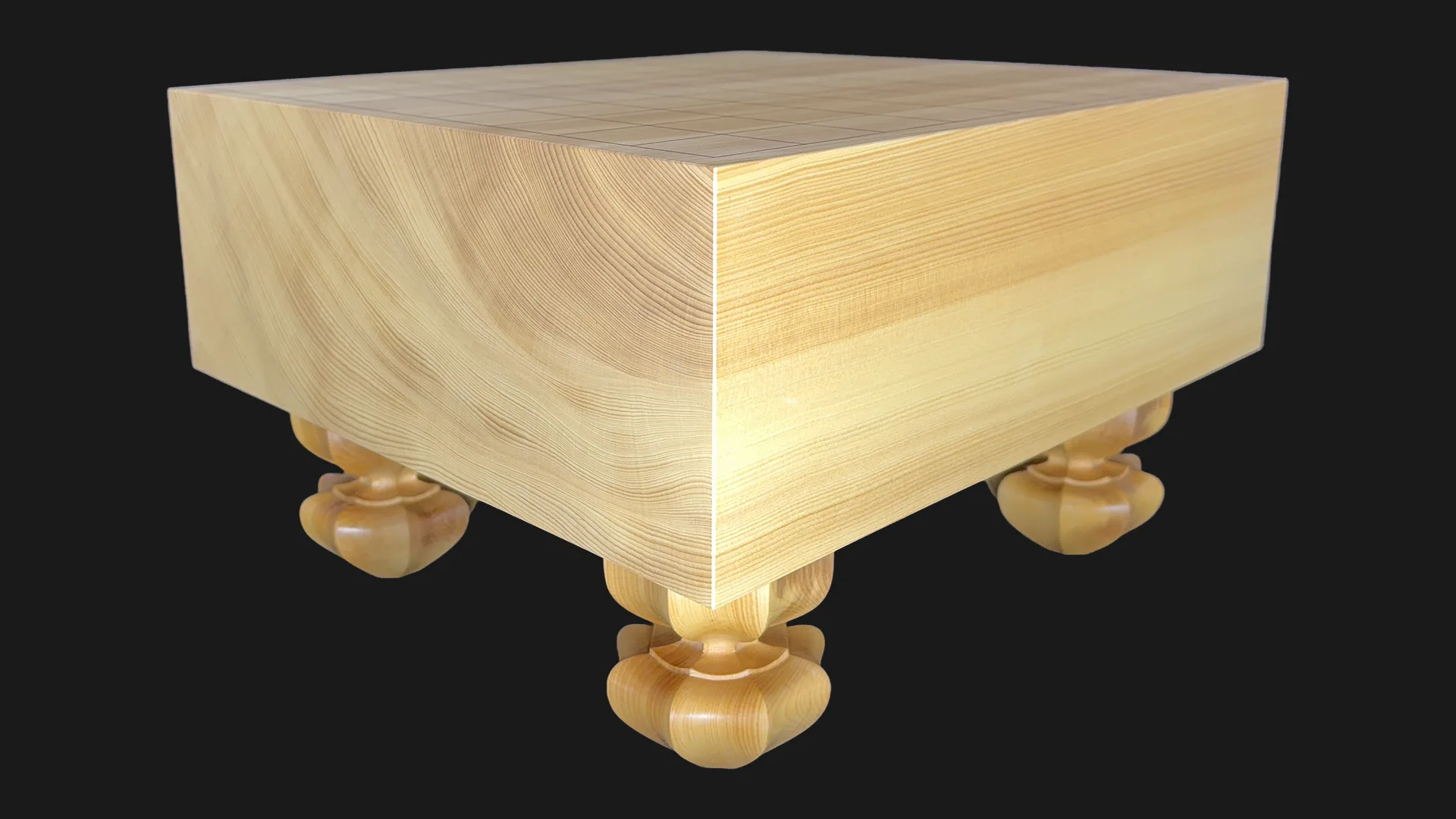
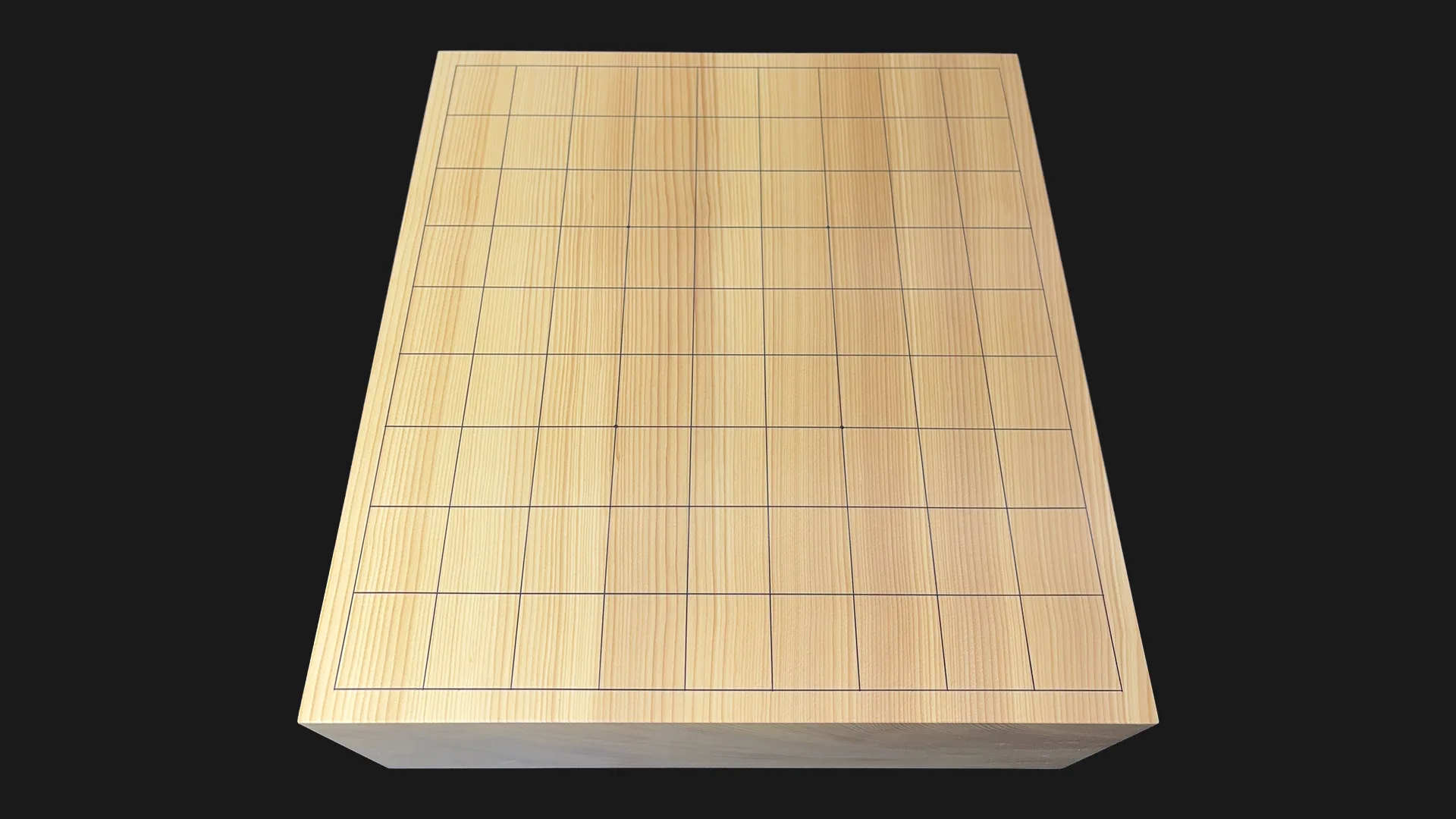
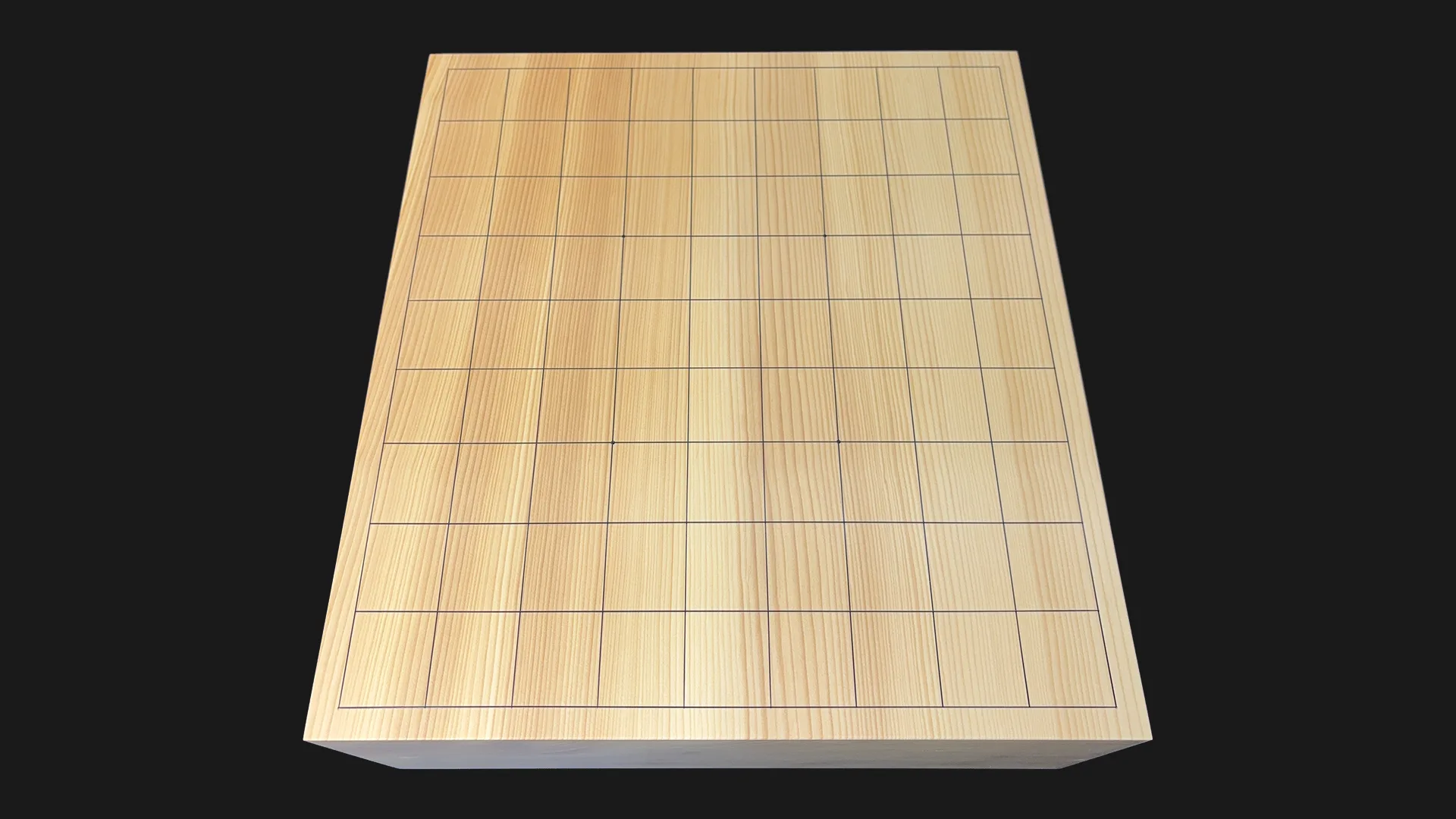
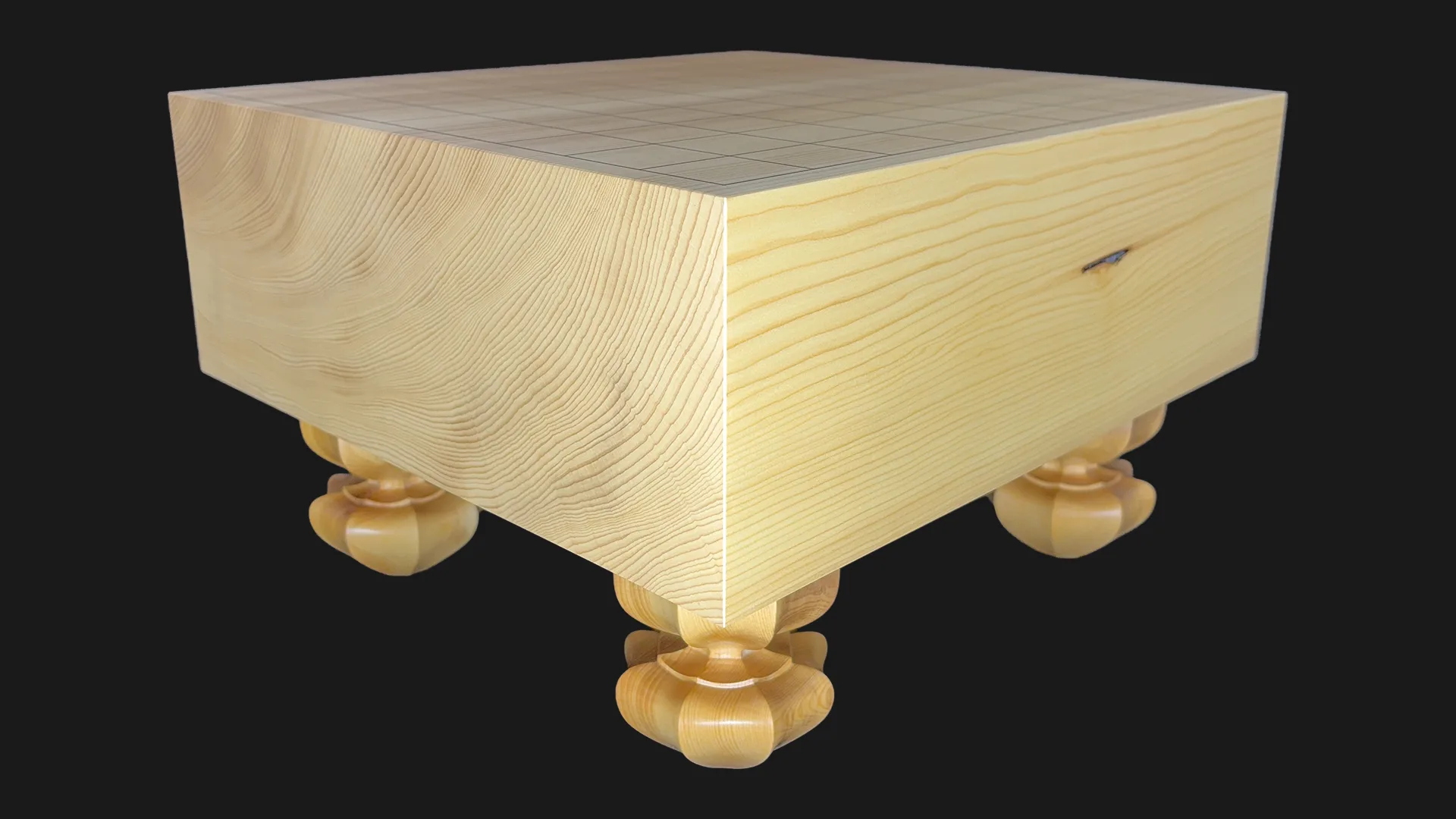
4.2-sun Shogi Floor Board – Ehime Kaya, Single-piece, Straight-grain cut ( Item No. T11 )
¥200,000
About the Wood
This board is made from kaya grown in Ehime Prefecture, on the island of Shikoku in western Japan. Kaya (Japanese torreya) has long been used for shogi and Go boards. The wood has a gentle resilience. When you place a piece, it makes a clear, crisp sound. Our master craftsman describes it as “a kaya board with beautiful grain.” He also notes that this board was once considered as a New Year gift prize for a shogi magazine.
About the Construction
This is a single-plank board. It is cut from one log and made into a board without joining any pieces. Because the whole surface is one continuous piece of wood, the flow of grain and color is unbroken. To cut a single straight-grain plank, the log must be considerably wider than the board itself.
About the Straight Grain
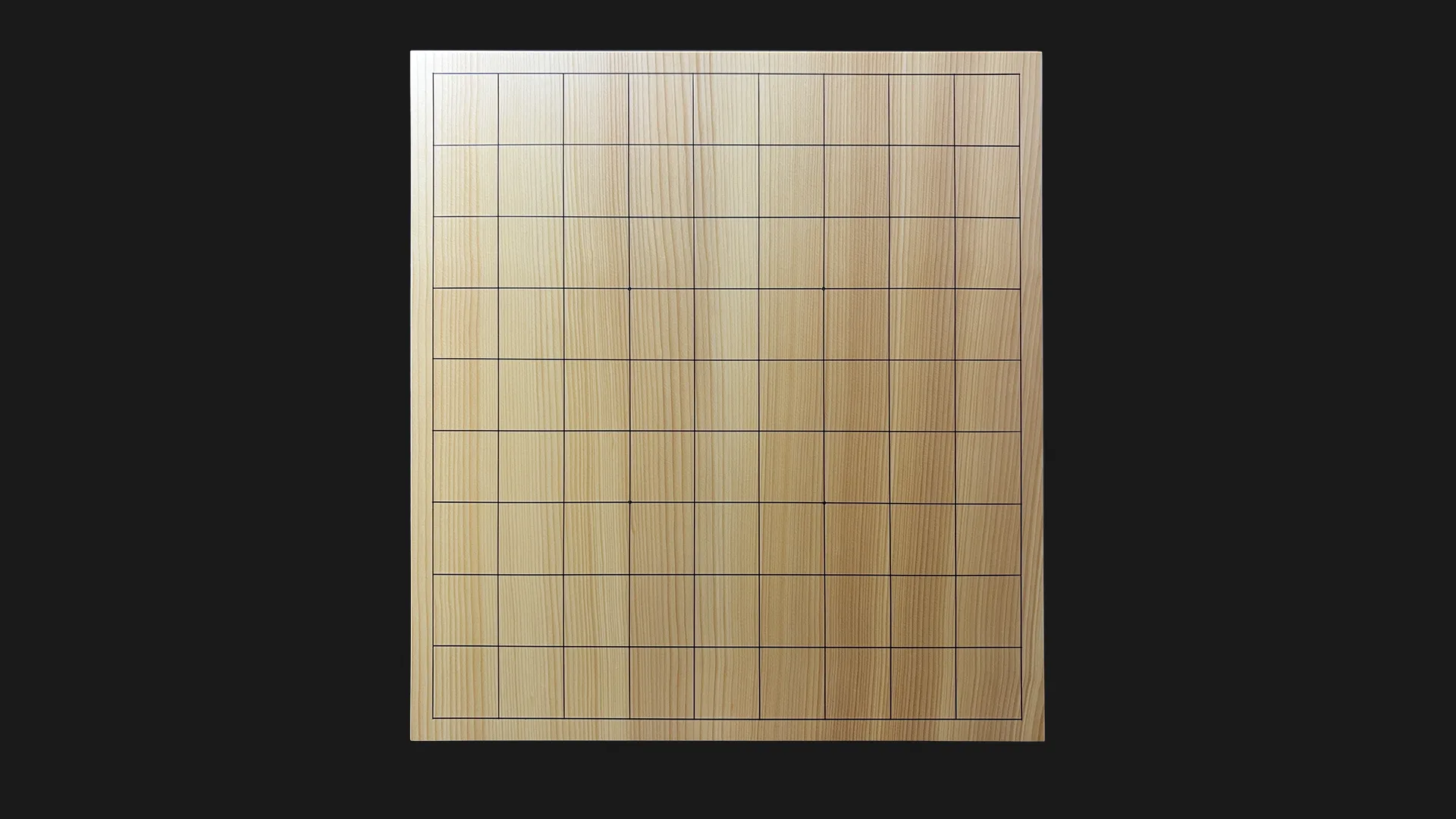
The board is cut in masame, or straight grain. In this cut, the log is sawn toward its center, so the grain lines run straight and parallel across the surface. On this board, the grain is fine, with narrow lines set closely and evenly together. Fine grain means narrow growth rings, which shows that the tree grew slowly over a long period.
Thickness and Feel
The board is 4.2 sun thick (about 12.7 cm). Sun is a traditional Japanese unit of length; one sun is about 3.03 cm. This is a standard thickness for a shogi board with legs. A floor board is used in the traditional way, with the two players sitting on the floor facing each other. Because the board has weight, the sound and feel of placing a piece are calm and steady.
About the Legs
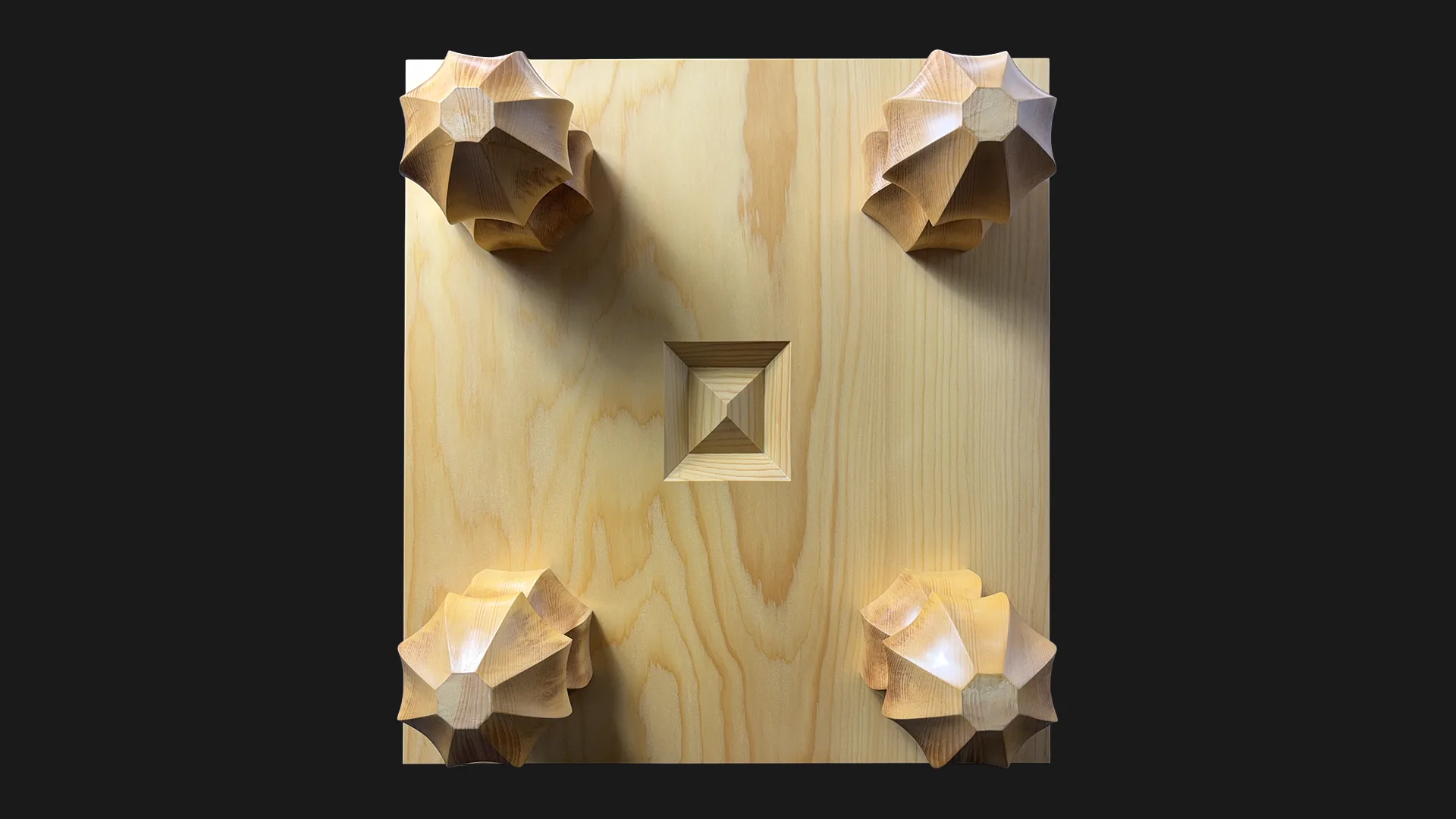
The legs of a floor board are carved in the shape of a gardenia fruit. In Japanese, the word for gardenia, kuchinashi, can also be read as “no mouth.” The shape is said to remind onlookers not to comment on a game in progress. Few craftsmen in Japan still carve these legs by hand.
Aging and Natural Characteristics
There are no knots on the playing surface, and the whole board has a reddish tone. There is a resin pocket mark on one side of the board. A resin pocket (yanitsubo) is a mark left where resin had gathered inside the tree, and it is found in natural wood. Our master craftsman says: “There is a resin pocket mark on the side. Without it, the board would be priced higher.” The mark is not on the playing surface. With use, kaya slowly deepens to a warm amber color across the whole board, so over the years the difference becomes less noticeable.
Choosing This Board
A single plank of kaya from Ehime Prefecture, with fine, even straight grain and a knot-free, reddish surface. The board is 4.2 sun thick. The resin pocket mark on the side is reflected in the price. We invite you to check its position and size in the photos as you consider this board.
| Item | Details |
|---|---|
| Item No | T11 |
| Type | Shogi Floor Board |
| Wood | Kaya |
| Origin | Ehime Kaya |
| Construction | Single Plank |
| Grain | Straight Grain (Masame) |
| Thickness | 4.2-sun |
| Color Tone | Red |
| Grain Pattern | Fine |
| Knots | None |
Each board is one of a kind.
Please contact us before placing an order to confirm availability.
For orders shipped outside Japan, customs duties or local taxes may be charged upon delivery depending on the destination country.
You May Also Consider
-
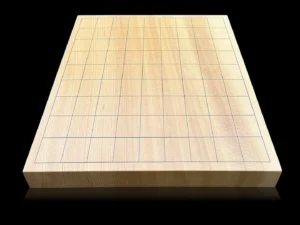
1.35-sun Shogi Table Board – Shimane Kaya, Single-piece, Straight-grain cut ( Item No. ST15)
¥33,000 View Details -
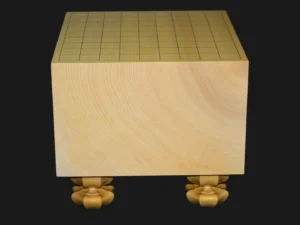
7-sun Shogi Floor Board – Kyushu Kaya, Single-piece, Straight-grain cut ( Item No. K248)
¥710,000 View Details -
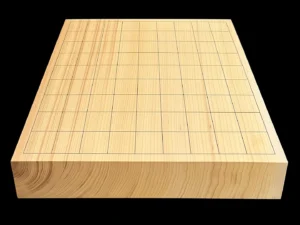
2.1-sun Shogi Table Board – Kyushu Kaya, Single-piece, Straight-grain cut ( Item No. ST2 )
¥70,000 View Details -
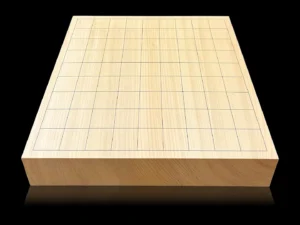
2.1-sun Shogi Table Board – Kyushu Kaya, Single-piece, Straight-grain cut ( Item No. ST5)
¥66,000 View Details